Articles Posted in Fishing Industry

Published on:

Fishing_Vessel-300x202Alaska’s seafood industry is one of the world’s most productive fisheries, and one of the most economically important in the nation. A new report released in May puts some numbers in perspective, and they’re worth understanding if you work on the water in Alaska.

The 2026 Economic Value of Alaska’s Seafood Industry report, produced by McKinley Research Group for the Alaska Seafood Marketing Institute (ASMI), uses data from the 2023 and 2024 fisheries. The industry contributed $5.2 billion in total economic value from harvest, processing, and distribution. Alaska fishermen harvested an average of 5.1 billion pounds of seafood valued at $1.5 billion at the dock. Processors turned that raw harvest into 2.4 billion pounds of finished product worth $4.2 billion, adding $2.7 billion in value before the product ever left the state.

The workforce behind those numbers is substantial. The industry directly employed 41,800 people, including more than 15,000 Alaskans from over 120 communities statewide. Total labor income generated by the seafood sector reached $1.9 billion.

Published on:

Man-Taking-Photo-300x200You already know that you work in one of the most dangerous industries in the world. When something goes wrong, the decisions you make in the first hours and days after an injury can determine whether you receive the full compensation you are entitled to or whether you walk away with far less than you deserve.

Maritime law and the Jones Act exist to protect you. Here is how to protect yourself.

  1. Report any Accident Immediately
Published on:

Alaska_Fishingboats-300x162Before any commercial fishing vessel leaves the dock in Alaska, Washington, Oregon, or California, captains perform an essential task; they check the weather forecast. Marine forecasts, buoy data, and storm advisories determine whether a crew goes out. That information comes from a federal infrastructure system most fishermen take for granted, until it breaks down.

Federal budget conflicts in Washington, D.C. have consequences that reach beyond the capital. For commercial fishermen, cuts to the National Oceanic and Atmospheric Administration (NOAA) and the National Weather Service (NWS) create real safety hazards on the water.

Since early 2025, hundreds of NWS and NOAA employees have left due to layoffs and attrition. About 40% of the nation’s 122 weather forecast offices now carry significant staffing vacancies, and at least eight are unable to maintain 24-hour coverage. As Tom Fahy of the National Weather Service Employees Organization noted, “This has never happened before. We’ve always been an agency that has provided 24/7 service to the American public.” Five former NWS directors issued a joint warning to Congress: “Our worst nightmare is that weather forecast offices will be so understaffed that there will be needless loss of life.”

Published on:

Alaska-Sea-Grant-300x206Alaska’s seafood industry is getting a significant boost in workforce development thanks to new state funding through the Technical and Vocational Education Program (TVEP). This initiative supports five key programs for both seafood harvesters and processors.

For processors, the Alaska Seafood School will offer three programs focusing on crucial areas: food and processing regulations, automated equipment and refrigeration, and plant management.

Fishermen across Alaska will benefit from two TVEP-funded projects launching this fall: the Skipper Apprentice program in Bristol Bay, providing essential training and mentorship for new crew, and the innovative “Scaled Seafood” project, offering vital fisheries business training.

Published on:

Alaska_Trawler-300x200
House Bill 116 is currently under consideration by the Alaska State Senate, representing a potential turning point for the state’s commercial fishing industry. This legislation would authorize Alaskan fishermen to form their own insurance cooperatives, which would lower operating costs and ensure the financial stability of smaller operators facing increasingly difficult economic conditions. Having passed the House unanimously, the bill is now before the Senate, with a strong possibility of enactment this session.

The bill originated from the Joint Legislative Task Force Evaluating Alaska’s Seafood Industry, which analyzed and identified growing financial strains on commercial fishermen. As Representative Louise Stutes, R-Kodiak, and Senate President Gary Stevens have emphasized, the combination of record-high operating costs and record-low fishing market prices calls for innovative solutions to support this vital sector of Alaska’s economy.

The primary concern driving this legislation is the increasing cost and decreasing availability of traditional insurance for fishing vessels. Underwriters are reportedly increasing premiums and becoming more selective with their customers. This has created a significant barrier for many independent fishermen seeking insurance. By enabling fishermen to collectively pool their resources, they can create a larger, potentially lower-risk insurance pool, theoretically leading to more attractive rates and greater access to coverage.

Published on:

chinook-salmon-300x200The Alaska Department of Fish and Game (ADF&G) has released its 2025 salmon run forecast for the Prince William Sound (PWS) and Copper River regions. The projections provide key insights into Chinook, sockeye, pink, and chum salmon returns, which will influence early-season management strategies.

Copper River Chinook Salmon

The 2025 forecast anticipates a total run of approximately 36,000 wild Chinook salmon in the Copper River, with a prediction range between 25,000 and 51,000 fish. This is 25% below the recent 10-year average of 48,000, classifying the run as “Weak.” Given the sustainable escapement goal (SEG) of 21,000 to 31,000 fish, ADF&G plans to enforce conservative management to support stock sustainability.

Published on:

Alaska_fishermen_working_with_net-300x225In response to mounting economic challenges within Alaska’s seafood sector, the Joint Legislative Task Force Evaluating Alaska’s Seafood Industry has released a preliminary report. The report identifies critical issues affecting the industry and proposes policy recommendations to address them.

Key Challenges Identified

The task force report highlights several pressing challenges:

Published on:

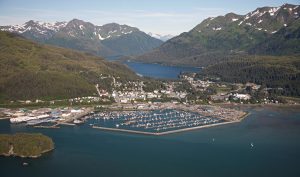
Cordova_Alaska_aerial-300x177Alaska’s seafood industry, a cornerstone of the state’s economy and U.S. fisheries, is facing significant hurdles, as revealed in NOAA’s 2024 report. Economic conditions, workforce challenges, and climate impacts are driving this once-thriving sector into a difficult period, resulting in substantial declines in profits and industry-wide layoffs.

Economic Downturn and Job Losses

The report details that from 2021 to 2023, Alaska’s seafood industry saw a 50% drop in profitability, largely due to rising costs for fuel, labor, and materials combined with declining global seafood prices. In total, the industry suffered a revenue loss of around $1.8 billion, impacting over 38,000 jobs across the United States, including workers in Alaska and beyond. This economic slump is attributed to global market competition and a complex web of supply chain issues that continue to hinder recovery efforts.

Published on:

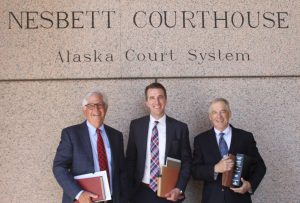
Nesbett_Courthouse-300x203Stacey and Jacobsen, PLLC, one of the nation’s leading maritime personal injury plaintiff firms, is proud to announce the opening of a second office in Anchorage, Alaska. This expansion strengthens the firm’s ability to provide legal services to maritime workers and their families across the Pacific Northwest and Alaska, two of the most vital regions for the fishing and maritime industries. Stacey & Jacobsen has a storied history in Alaska, including trials, mediations, vessel inspections, hearings, and depositions. This new office reinforces the firm’s commitment to aggressively and effectively protect and pursue our clients’ rights and will build upon the firm’s reputation.

The Seattle office located at Fishermen’s Terminal, is just minutes from the Port of Seattle, and positions the firm at the heart of one of the nation’s most active maritime hubs. In Anchorage, the new office in Midtown Anchorage places the firm in close proximity to Alaska’s thriving fishing and maritime communities and the Alaska state and federal courthouses, reinforcing their commitment to serve injured seamen, commercial fishermen, and other maritime workers who often face dangerous working conditions. The new office offers a dynamic environment to assist the firm’s next chapter in Alaska.

Both offices are equipped to manage cases related to maritime law, Jones Act claims, and wrongful death cases. Stacey and Jacobsen, PLLC has long been known for its comprehensive understanding of maritime law and dedication to securing compensation for injured workers.

Published on:

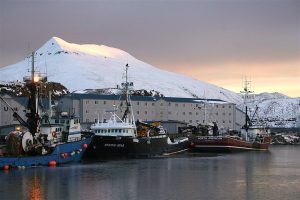
1080px-Dutch_harbor_crab_boats-300x200Commercial fishing is currently facing a range of challenges that include overfishing, climate change, illegal fishing that is depleting stocks, regulatory changes, and economic changes that include higher fuel prices, equipment costs, and labor costs. In response, commercial fishermen are increasingly pivoting to adapt. Fishermen are also investing in advanced technology and collaborative efforts to enhance resource management and ensure the long-term viability of their operations amid growing pressures on seafood resources.

One way fishers are successfully pivoting is by outfitting their vessels to expand functionality. John Schumacher founded Distinctive Finishes, a business located in Haines, Alaska, as a response to the growing need for versatile fishing equipment. It became clear to John and others that relying solely on salmon and crab fishing was no longer financially sustainable for many fishermen.

Distinctive Finishes is nearing completion on the overhaul of the F/V DAB CHICK, a 53-year-old 34-foot crabber and gillnetter. Once the project is finished, the F/V DAB CHICK will be equipped for longlining, trolling, gillnetting, and crabbing. This opens many more fishing options for the vessel owner.

Contact Information