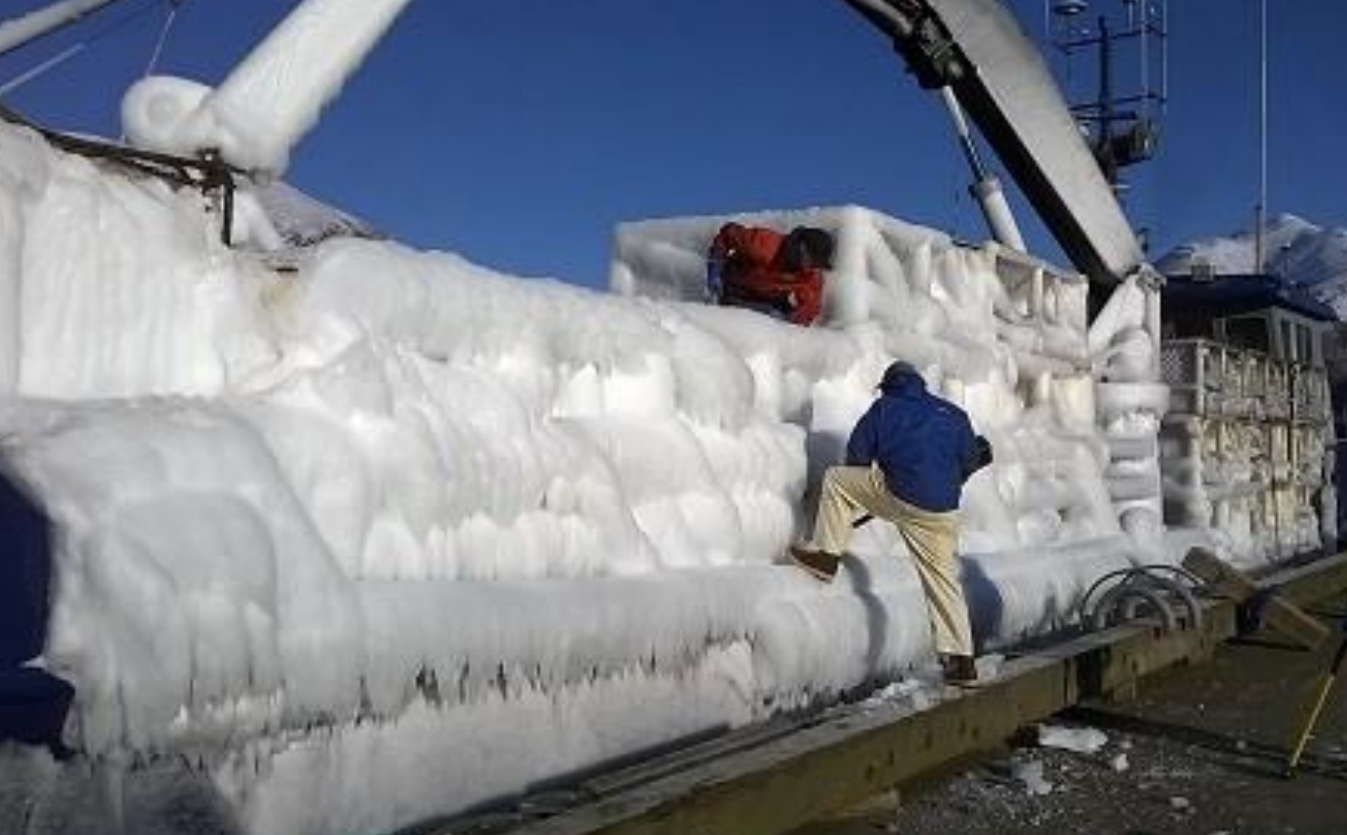
If you’ve been injured while working on a vessel during winter months, whether from a slip on an icy deck, equipment failure in freezing conditions, or any other cold-weather accident, you need to understand your rights under federal maritime law. The maintenance and cure doctrine exists precisely for moments like these, providing a safety net regardless of how or why the injury occurred.
Winter Brings Predictable Hazards
Slip-and-fall accidents on icy decks account for a sizable portion of winter injuries. A deck that was safe in September becomes treacherous in January when sea spray freezes on contact. Hypothermia and cold exposure can strike workers in these freezing conditions. Equipment failures create additional hazards as hydraulic lines become brittle, winches jam, and safety equipment may not function as designed. Ice removal work itself poses dangers, from minor cuts to serious fractures. And if someone goes overboard in winter waters, cold shock can be lethal within minutes.
Maintenance and cure applies to all these injuries. The no-fault nature of this federal maritime benefit means that whether you slipped on ice, suffered frostbite, or were injured when frozen equipment failed, your employer owes you these benefits.
Understanding Your Rights
Maintenance and cure is a fundamental right guaranteed to every seaman who becomes ill or injured while working on a vessel. Maintenance refers to a daily living allowance covering rent, food, utility bills, and other reasonable costs, during recovery. Cure covers all necessary and reasonable medical expenses such as hospital bills, therapy costs, diagnostic tests, and transportation to medical appointments. Your employer must pay until you reach maximum medical improvement.
The timing of your injury doesn’t change your rights. Whether injured in calm summer seas or during a January storm in the Bering Sea, you’re entitled to the same benefits. Winter injuries often require extended recovery periods. Frostbite damage can take months to heal. Fractures from falls on icy decks can require surgery and lengthy rehabilitation. Your employer’s obligation continues throughout this entire process.
If your injury happened offshore, getting you to medical care in winter conditions can be complicated and expensive. Federal maritime law is clear. Your employer must cover transportation costs, including U.S. Coast Guard medevacs, flights to shore, and ambulance transport.
Document Your Winter Injury Properly
Report the injury immediately. Don’t wait until weather improves or until you reach port. Document weather conditions such as temperature, wind speed, sea state, and visibility. If sea spray was freezing on deck or structural icing was affecting stability, write it down.
Photograph conditions if you can safely do so. Document icy decks, frozen equipment, insufficient nonskid surfaces, or ice buildup on walkways. Note safety equipment failures such as unavailable ice removal equipment, non-existent protocols, or deteriorated surfaces. This information becomes crucial if your injury was caused by negligence or unseaworthiness.
Document all injuries and medical interventions. Wintertime injuries can have complications that develop over time. Frostbite damage can worsen days after exposure, and fractures may involve soft tissue damage that isn’t immediately apparent.
If your employer is delaying or denying maintenance and cure benefits for a winter injury at sea, contact the experienced maritime attorneys at Stacey & Jacobsen, PLLC. With offices in Seattle and Anchorage, we understand how weather conditions affect maritime injury claims. Call 1-877-332-5529 for a free consultation.