 Maritime Injury Law Blog
NTSB Finds Captain’s Sleep Debt Caused the Grounding of F/V Eileen Rita


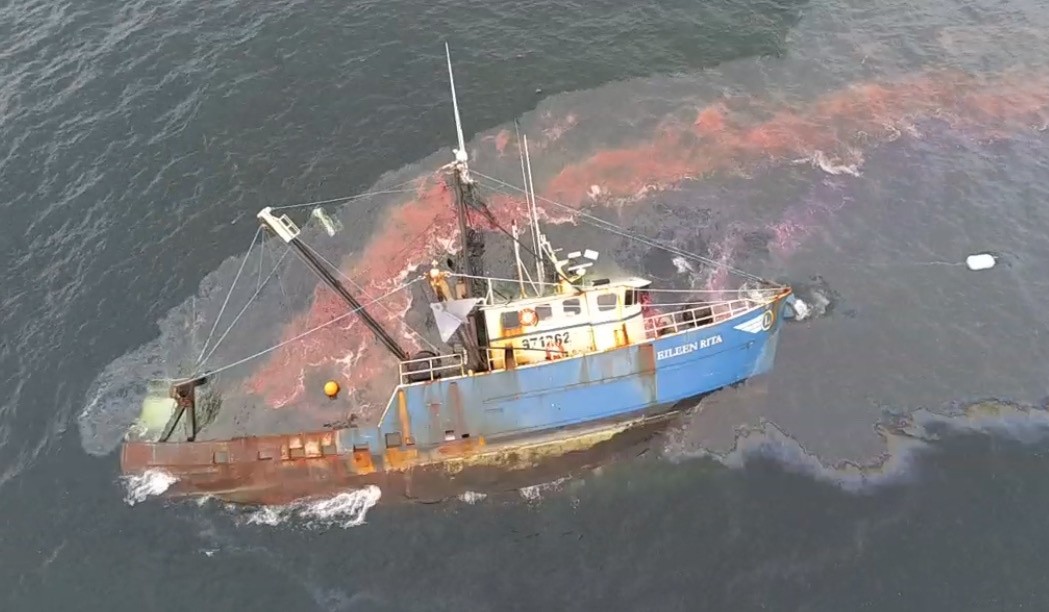 The National Transportation Safety Board (NTSB) has released its findings on the April 11, 2025, grounding of the commercial F/V EILEEN RITA near Green Island, approximately eight miles east of Boston. It has been determined that the cause was preventable; the captain fell asleep at the helm. The complete report can be found at NTSB.
The 86-foot scallop dragger left Boston Harbor at 10:00 p.m. on April 10, 2025, to fish Stellwagen Bank and was returning to port when the grounding occurred at 7:31 a.m. The NTSB found that in the 48 hours before the accident, the captain had logged only eight hours of sleep which were broken into three short segments. He was alone on watch while the two deckhands were asleep, and the vessel was on autopilot when he nodded off. He had adjusted the heading 15 to 20 degrees to port in an effort to clear a lighthouse, sat down, and fell asleep. About ten minutes later, the F/V EILEEN RITA struck the rocks.
“I didn’t realize how tired I was…until it was too late,” the captain told investigators. It is a sentence that will be familiar to anyone who works at sea.
The three crewmembers donned survival suits and climbed to the gunwale as the vessel listed onto its side. A Boston Police Harbor Patrol boat pulled them to safety at 8:27 a.m. The F/V EILEEN RITA later sank, and was declared a total loss valued at $720,000, and left an estimated 4,000 gallon diesel spill in the harbor. To learn more about the rescue, see our earlier post, Three Rescued after Scallop Boat Capsizes.
The NTSB’s findings focus on an equipment deficit. The F/V EILEEN RITA did not have a watch alarm, which is an automated system that detects operator absence or incapacitation and sounds an alert. The agency noted that even a modest sleep deficit of two hours is enough to impair attention and trigger involuntary sleep. Eight hours of sleep in 48 is not a modest deficit. The NTSB concluded that a properly set watch alarm might have woken the captain before the vessel ran aground.
Watch alarms are not currently required on U.S. commercial fishing vessels. That gap has consequences, which we explored in detail in our post on Fatigue Among Maritime Workers. Sleep deprivation impairs judgment in ways similar to alcohol intoxication, however unlike alcohol, there is no test, no legal limit, and often no external signal that a crewmember is dangerously impaired. The grounding of F/V EILEEN RITA serves as a case study for officials and mariners facing similar scenarios.
Under the Jones Act and general maritime law, vessel operators have a legal duty to maintain a safe workplace and a seaworthy vessel. A single captain standing watch for an overnight scallop trip without a watch alarm, on a fraction of the sleep required for safe operation, raises legitimate questions about whether that duty was met.
If you or a crew member has been injured in a maritime accident involving fatigue, overwork, or inadequate safety equipment, contact Stacey & Jacobsen, PLLC for a free, confidential consultation. With offices in Seattle and Anchorage, we represent maritime workers throughout Alaska, Washington, Oregon, and California. Call 1-877-DECKLAW.