Articles Posted in Coast Guard

Published on:

Wheel-300x150The official cause of death has been released for Todd Meadows, the deckhand who died February 25, 2026, after falling overboard from the F/V ALEUTIAN LADY during filming of Deadliest Catch Season 22. Todd Meadows cause of death was reported as drowning with probable hypothermia and submersion in cold water. The Alaska Department of Health has ruled the incident an accident.

The F/V ALEUTIAN LADY is one of the vessels featured on the long running reality series. Meadows had joined the crew in May 2025 and had not yet appeared on air at the time of his death. Captain Rick Shelford announced the loss on social media, calling it “the most tragic day in the history of the Aleutian Lady on the Bering Sea.” He remembered Meadows as someone whose enthusiasm and strong work ethic made him family almost immediately.

Meadows was from Montesano, Washington, and leaves behind three young sons. A GoFundMe established in his memory has raised more than $60,000.

Published on:

Wheel-300x150It is with great sadness that we report the deaths of two maritime workers following a fatal confined space incident aboard the freight barge WAYNEHOE, moored approximately 25 miles northwest of Ketchikan, Alaska, near Skowl Arm on Prince of Wales Island.

According to the U.S. Coast Guard, watchstanders at Coast Guard Sector Southeast Alaska in Juneau received a mayday call at 9:14 a.m. on Sunday reporting that the crew of the tug vessel CHUKCHI SEA had lost contact with four crewmembers inside a confined space aboard the barge. The tug and barge are owned by Hamilton Marine Construction, a Bellingham, Washington-based company.

The U.S. Coast Guard directed the launch of a 45-foot Response Boat-Medium crew from Coast Guard Station Ketchikan, with members of the South Tongass Volunteer Fire Department aboard, to respond to the incident. While en route, the crew of the CHUKCHI SEA recovered one deceased crewmember and assisted two survivors out of the confined space.

Published on:

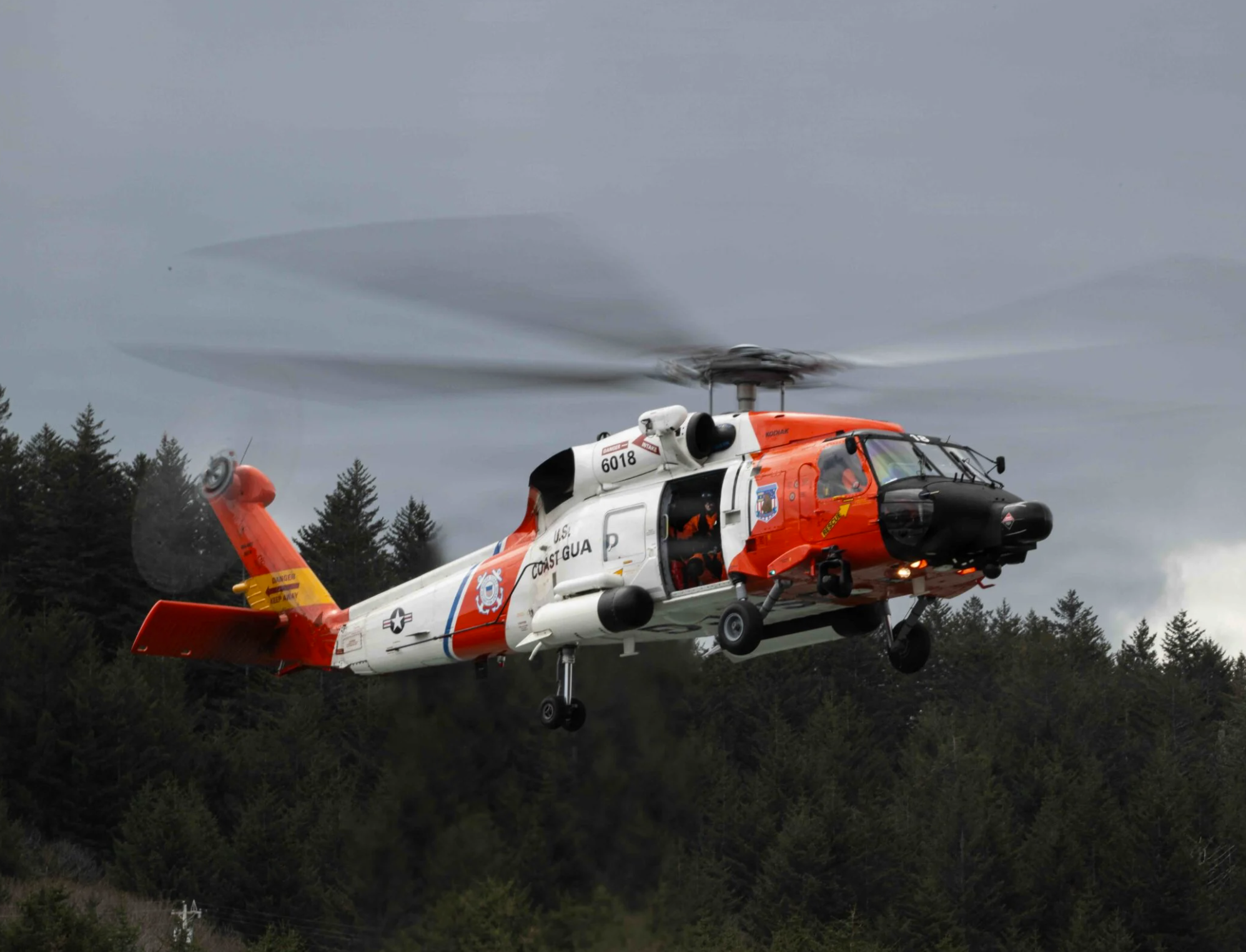
Tyler_Jaggers-300x146The maritime community lost one of its finest on March 5th, 2026. Aviation Survival Technician Second Class Tyler Jaggers, assigned to U.S. Coast Guard Air Station Astoria, passed away from critical injuries sustained while rescuing a distressed mariner from a commercial vessel offshore.

On February 27, 2026, Jaggers was part of an MH-60 Jayhawk crew responding to a medical emergency aboard the G/C MOMI ARROW, which was located approximately 120 miles west of Cape Flattery, Washington at the time of the incident.

In the hours that followed his injury, Jaggers was airlifted to Victoria General Hospital in British Columbia, then transferred to Madigan Army Medical Center at Joint Base Lewis-McChord in Tacoma, Washington, where he received medical care surrounded by those who loved him.

Published on:

FrederickMann-300x200The USCGC FREDERICK MANN is the sixth Fast Response Cutter (FRC) assigned to the Arctic District and the third for Kodiak. These aren’t ceremonial vessels, they are crucial for conducting search and rescue operations when fishing vessels are in distress, patrol fisheries to protect one of the nation’s most valuable natural resources, and defend the maritime borders.

Alaska’s coastline is longer than the entire rest of the United States combined. However, for decades the U.S. Coast Guard has relied on aging patrol boats built in the 1980s to cover this area. The new generation of FRCs represents a significant upgrade. These new vessels are equipped with advanced surveillance and communications systems and capable of deploying smaller boats over the horizon to reach vessels in distress or under suspicion.

The USCGC FREDERICK MANN will be incorporated into the U.S. Coast Guard during a significant period of modernization. After the commissioning of the USCGC STORIS (the service’s first new polar icebreaker in more than 25 years) the Arctic District is also set to receive two additional Offshore Patrol Cutters soon. For a region where climate change is opening new shipping lanes and creating new security challenges, this is an important addition.

Published on:

Coast-Guard-Investigation-300x185The U.S. Coast Guard has officially launched a district-level investigation into the sinking of the fishing vessel LILY JEAN, which occurred approximately 25 miles off Cape Ann, Massachusetts, and resulted in the loss of seven lives.

Commander of the U.S. Coast Guard’s Northeast District, Rear Adm. Michael Platt, authorized the inquiry after the 72-foot commercial fishing vessel’s entire crew was lost in the incident. Emergency responders were alerted when the vessel’s emergency beacon (EPIRB) activated around 6:50 a.m. that morning.

Multiple U.S. Coast Guard units responded to the distress call, including an Air Station Cape Cod helicopter crew, a Gloucester small boat team, and the U.S. Coast Guard Cutter THUNDER BAY. Rescuers discovered a debris field at the beacon’s location and retrieved one deceased individual from the water. The vessel’s life raft was found deployed but empty.

Published on:

Gloucester_Memorial-300x252It is with great sadness that we report the U.S. Coast Guard has suspended its search for the F/V LILY JEAN after more than 24 hours of effort by air and sea turned up no survivors. One body was recovered from the water. Six crew members remain missing and are now presumed dead.

The distress began early Friday morning, when the U.S. Coast Guard received an emergency beacon activation signal from the F/V LILY JEAN, a 72-foot groundfish trawler based out of Gloucester. The vessel had gone down approximately 25 miles off the coast of Cape Ann, about 40 miles northeast of Boston. Repeated attempts to reach the boat by radio went unanswered.

The F/V LILY JEAN was captained by Accursio “Gus” Sanfilippo, a fifth-generation Gloucester fisherman. The crew included Paul Beal Sr. and his son Paul Beal Jr., John Paul Rousanidis, Freeman Short, and Sean Therrien. Also aboard was Jada Samitt, a 22-year-old NOAA fisheries observer from Virginia, assigned to collect data on the vessel’s catch.

Published on:

Florida_Fishing_Boat-300x156On Sunday, December 14th, 2025, a fisherman was rescued after his vessel caught fire approximately 100 miles west of Clearwater, Florida.

At 3:27 p.m., the U.S. Coast Guard’s Southeast District was alerted by an emergency position radio beacon, prompting them to dispatch a Clearwater MH-60 Jayhawk helicopter rescue team.

The fisherman abandoned the burning vessel and was located in a life raft near the site, where sea conditions measured 2 to 4 feet with winds of 14 knots. The U.S. Coast Guard dispatched a rescue swimmer and safely hoisted the fisherman at approximately 5:46 p.m.

Published on:

Fishing_Vessel-300x202Have you ever thought about how safety regulations for commercial fishing vessels get decided? The U.S. Coast Guard wants to hear from people like you.

They’re looking for new members to join the National Commercial Fishing Vessel Safety Advisory Committee, a group that meets twice each year to help develop safety policies affecting fishing operations nationwide. They are especially interested in hearing from those working on the water and those building the equipment that keeps crews safe.

The U.S. Coast Guard is specifically looking for fishermen and manufacturers to fill current openings. If you’ve spent time on commercial vessels or you design and build equipment for the fishing industry, your practical knowledge is exactly what this committee needs.

Published on:

Polar_Star-300x200The waiver of the Jones Act which allows Finland to construct four Arctic Security Cutters for the U.S. Coast Guard represents a significant point at which Arctic geopolitics, fishing rights, and maritime policy intersect. This crucial decision highlights the challenges arising from longstanding protective laws and the conditions presented by the rapid changes to the Arctic Ocean.

As Arctic sea ice recedes to record lows each year, previously inaccessible areas are opening to human economic activity which include commercial fishing in waters once covered by permanent ice. The Arctic region also contains approximately 13 percent of the world’s oil, about a third of the world’s natural gas, and rare earth minerals on the sea floor. Warming waters, shifting fish migration patterns, and longer ice free seasons are driving commercial fishery growth in areas like the U.S. Arctic Exclusive Economic Zone, as fish ranges expand into the newly exposed central Arctic Ocean.

The Merchant Marine Act of 1920, commonly known as the Jones Act, requires that ships operating between U.S. ports must be American built, flagged, and crewed. Originally devised to bolster the Merchant Marine fleet after the First World War, the Jones Act has become the support system for domestic commercial shipbuilding. However, this measure has created some obstacles for Arctic operations.

Published on:

Vessel-Markings-300x199As the federal government shutdown extends into its third week, legislation unrelated to funding disputes, such as H.R. 3756, a bipartisan bill designed to combat illegal, unreported, and unregulated (IUU) fishing worldwide, remains stalled. Introduced in June 2025, this bill has been referred to multiple House committees and has yet to progress, as lawmakers continue to prioritize resolving the ongoing budget impasse.

IUU fishing is a major global problem, accounting for an estimated 20% of all seafood harvested annually. It costs legitimate fisheries between $10 billion and $23 billion each year and includes small-scale violations as well as organized criminal operations that falsify catch reports, bypass permits, and use fishing vessels for illicit activities.

The government shutdown, which began on October 1st, 2025, has furloughed roughly 900,000 federal employees, with another 700,000 working without pay. The U.S. Coast Guard continues operations under the Department of Homeland Security, but other agencies that support fisheries enforcement, such as NOAA’s Office of Law Enforcement, are operating with limited capacity. Essential inspections and enforcement continue, but some investigative and international cooperation efforts may be delayed.

Contact Information