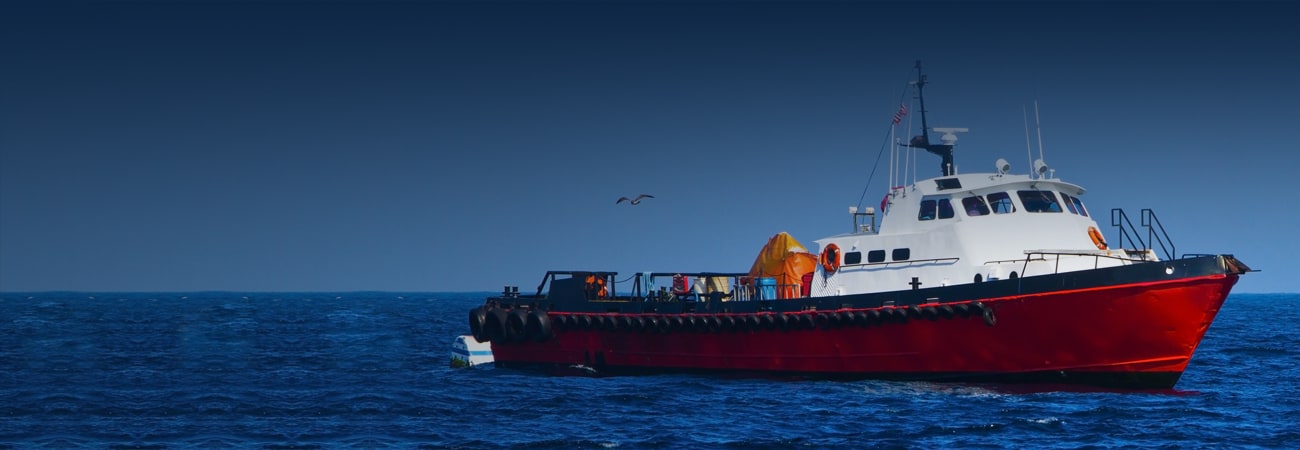
Boat on the sea
Published on:

The 74-year old captain has been rescued from his fishing vessel near Sitka, Alaska. The captain of the 44-foot trawler ZIMOVIA was rescued from the vessel as it was being knocked about on the rocks by the surf. The Coast Guard was aided in the rescue by the Sitka Mountain Rescue boat crew who launched a small boat from shore to aid in the rescue of the man moments before the vessel sank. The rescued crewman was taken to Sitka Hospital suffering from cold weather exposure. The cause of the accident is under investigation, and potential environmental damage is being assessed.

Published on:

A fire broke out on a fishing trawler moored near Seattle Gas Works park Friday night. The 125-foot fishing vessel, ROYAL ENTERPRISE, reportedly caught fire around 7:45 p.m. No one was aboard the vessel at the time of the fire, and the cause of fire is under investigation. The Seattle Fire Department responded to the fire and was able to confine the fire to the deck level and control the fire in approximately an hour. This is the second boat fire to strike the Seattle fishing fleet in the last ten days.

Published on:

The ARCTIC DAWN caught fire while moored in Ballard early Monday morning. The 100 foot Alaska crab boat had been previously featured on the Deadliest Catch television series. One crewman was aboard the vessel at the time and was able to escape the fire without injury. Nearly one hundred firemen responded to the three alarm fire. The fire involved the superstructure of the vessel but did not appear to affect the lower decks. The cause of the fire is unknown at this time.

Published on:

A claim for punitive damages made by a commercial diver based upon the legal theory of unseaworthiness has withstood legal challenge in the United States District Court for Hawaii. The Court found as a matter of law that punitive damages may be sought in cases involving unseaworthiness. The Court based its holding on the United States Supreme Court’s recent decision in Atlantic Soundings Co. v. Townsend, finding that the Ninth Circuit’s previous holding in Evich v. Morris permitting punitive damages for unseaworthiness remains intact.

Prior to the Supreme Court’s decision in Atlantic Soundings v. Townsend, the majority of the Courts had expanded the Supreme Court’s decision in Miles v. Apex Marine to prohibit punitive damages in Jones Act and unseaworthiness cases. Based upon the Supreme Court’s rationale and analysis in Atlantic Soundings allowing punitive damages in maintenance and cure cases, the Hawaii District Court rejected the vessel owner’s argument that the Supreme Court’s holding in Miles v. Apex Marine prohibited punitive damages in unseaworthiness claims. In a detailed analysis, the District Court Judge found that there was no statutory preemption of punitive damages in a general maritime law claim for unseaworthiness.

Citing Evich v. Morris with favor, the District Court noted that punitive damages serve the purpose of punishing a defendant, teaching him to not do it again, and deterring others from following his example. To recover punitive damages, a seaman must show that the vessel owner’s conduct is willful and wanton.

Published on:

Superior Court Judge Richard Eddie has held that a seaman’s wrongful death claim involving claims for punitive damages for unseaworthiness and Jones Act negligence will proceed to trial on the merits. The vessel owner and employer’s motion to dismiss the seaman’s claim for punitive damages was rejected. Following the Supreme Court’s recent decision in Atlantic Soundings v. Townsend, Judge Eddie found as a matter of law that claims for punitive damages are available under both the Jones Act and under the unseaworthiness doctrine.

The case, Nes v. Sea Warrior, King County Cause No. 09-2-05771-1SEA, is thought to be the first in Washington State to reestablish a seaman’s right to punitive damages. The Ninth Circuit had previously recognized punitive damages for seamen in cases such as Evich v. Moriss, but subsequent to the Supreme Court’s decision in Miles v. Apex Marine, most Courts had prohibited punitive damages in seaman injury and wrongful death cases. However, in 2009 the Supreme Court decided Atlantic Soundings v. Townsend allowed punitive damages in maintenance and cure cases. In cases post Atlantic Soundings, punitive damages may not be available in Death On the High Seas Act cases. However, that no longer means that punitive damages will not be granted in appropriate negligence and unseaworthy cases involving willful and wanton conduct.

Late in 2009 a King County jury awarded a seaman 1.3 million dollars in punitive damages for willful failure to pay maintenance and cure. That case, Clausen v. Icicle Seafoods, is now on appeal and will set legal precedent in Washington State about how punitive damages may be calculated and awarded.

Published on:

A crewman suffered a head injury on Tuesday and was airlifted from a fishing vessel 50 miles off the Oregon Coast. The cause of the accident is unknown at this time. Two Coast Guard helicopters responded to the emergency. The crewman was taken to North Bend for treatment. Commercial fishermen working in Oregon and Washington continue to suffer injuries at an alarming rate. Every vessel owner owes their crewmen a safe place to work and a seaworthy vessel. In cases of serious injuries, crewmen must be evacuated for treatment as soon as possible. This is particularly true in head injury cases, where the extent of crewmen’s injuries may not be readily apparent, and complications can have delayed onset.

Published on:

A crewman working aboard the fishing vessel RONDYS suffered a head injury requiring emergency medical evacuation today. The accident happened 160 miles off shore from Westport. The fishing vessel RONDYS is a 113-foot steel hulled vessel built in 1993; records indicate the vessel is owned by Rondys Tendering LLC of Westport. The crewman was airlifted to Emanuel Hospital in Portland for treatment, and his condition is unknown. What caused the accident is unknown at this time.

Published on:

One passenger was airlifted to a hospital in Vancouver with possible head injuries after a British Columbia Ferry, Queen of Nanaimo, carrying 207 passengers, rammed a ferry dock on Mayne Island near Victoria. Five other persons were also injured in Tuesday’s accident. The captain of the ferry capable of carrying up to 192 vehicles apparently was unable to put the vessel in reverse and tried to drop the ferry’s anchor before colliding with the dock. Subsequent investigation found ropes in the wheel of the ferry. The ferry had reportedly run over a crab pot during the ferry trip, and it is speculated that the line in the wheel resulted in other mechanical failure. The British Columbia ferries have had ongoing problems with crab fishermen along the ferry’s route. The ferries frequently encounter crab pots along the ferry route, resulting in lines becoming entangled in the ferry’s wheel. It is unknown whether or not the captain of the Queen of Nanaimo was able to alert the passengers of the impending collision before the accident happened. Investigation into the accident will be ongoing.

Published on:

Trident Seafoods has announced the purchase of Icicle Seafoods’ surimi seafood plant in Bellingham, Washington. The sale is scheduled to close on August 16, 2010. Trident is recognized as one of the largest seafood companies in North America. The transaction is part of Trident’s plan to expand its retail presence and become more vertically integrated. Trident harvests, processes and markets a wide range of products including pollock, salmon, crab, and cod. The most recognizable surimi product consumed in the United States is artificial crab and lobster. Trident targets fisheries in the Bering Sea, Gulf of Alaska, and off the coasts of Washington and Oregon. Icicle has indicated the proceeds of the sale will be reinvested in the company.

Published on:

For the past ten years, maritime workers aboard ships and fishing vessels at sea have been able to cheaply stay in contact with their wives, children and girlfriends, and even run a shoreside business, utilizing the ship’s e-mail system. There has never been much privacy on a ship at sea, but most crewmen think their ship-to-shore e-mails to their wives and girlfriends are confidential. Few crewmen realize that those e-mails on company provided computers and accounts may not be confidential, even though the crewman is using a private password. A recent United States Supreme Court decision, City of Ontario v. Jeff Quon, et al., 130 S.Ct. 2366, suggests that employees utilizing company owned computers may not have a reasonable expectation of privacy that their e-mails will not be read by their employer.
Continue reading

Contact Information