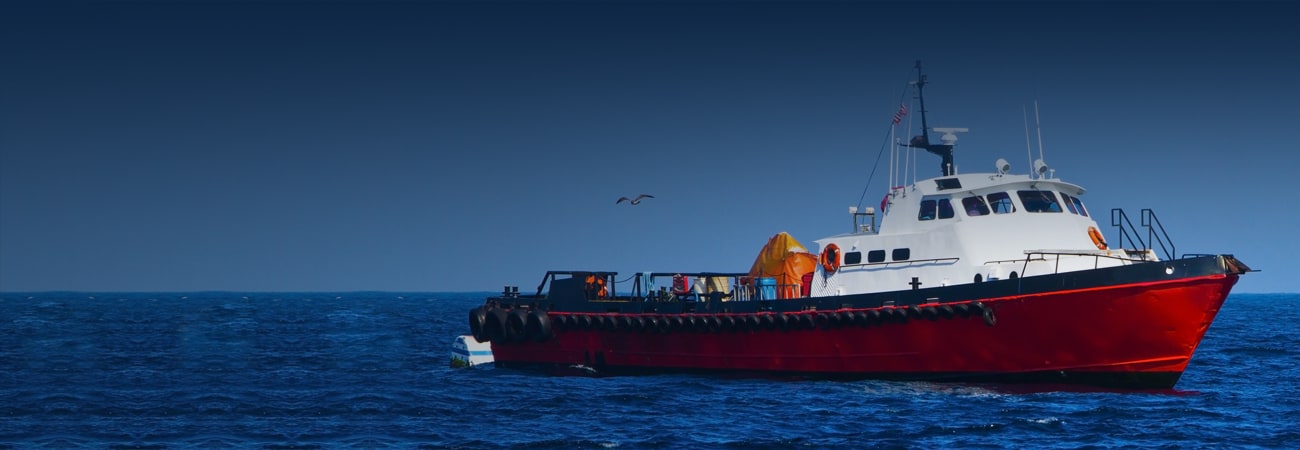
Boat on the sea
Published on:

The Canadian Transportation Board has issued a report criticizing American Seafoods Company for a lack of safety preparedness in a 2013 allision between AMERICAN DYNASTY and Canadian Frigate HMSC WINNIPEG. AMERICAN DYNASTY is a 272-foot American factory trawler run by a crew of up to 150 crewmen which experienced an electrical blackout while docking in Esquimalt, Victoria B.C., in 2013. During the blackout, the vessel gained speed and veered to the starboard before striking the WINNIPEG. The Safety Board noted that the auxiliary motors did not automatically turn on during the black out, and there was a breakdown in communication between the bridge and engineering department, resulting in the engineer not knowing the need to take urgent action to avoid the allision.

The Transportation Board stated: “The investigation found that, without procedures and comprehensive emergency drills, crews may not be proficient in taking mitigating action during an emergency. Effective management of safety requires individuals at all levels of an organization to identify and manage risks. In this occurrence, there were indications that aspects of safety associated with emergency preparedness and crew familiarization were not managed effectively.”

No injuries to the crew of AMERICAN DYNASTY were reported. However, six shipyard workers aboard WINNIPEG were reported to have suffered injuries. Although the impact was relatively slow, the size and power of these ships resulted in serious damage to both vessels.

Published on:

Orlando Coronel was injured while working as a fish processor for Fishing Company of Alaska (FCA). Coronel was involved in two separate accidents aboard the F/V ALASKA VICTORY, injuring his shoulder and wrist. Coronel retained the maritime lawyers Beard Stacey and Jacobsen, who filed suit against the Fishing Company of Alaska in King County Superior Court, alleging Jones Act negligence and that the unseaworthiness of the vessel lead to his injury.

Utilizing procedural rules, the Fishing Company of Alaska (FCA) removed Coronel’s case to Federal Court, trying to shift the case to Federal Court in Seattle rather than face a King County jury. FCA argued that a minor change in the removal statue made in 2011 permitted removal of maritime cases from State Court to Federal Court. Arguing on behalf of Coronel, Beard Stacey and Jacobsen claimed that the Federal Court lacked original jurisdiction over maritime claims filed in State Court, and the Savings to Suitors clause prohibited removal of Jones Act claims from State Courts. Furthermore, Coronel argued that the Jones Act gave him an absolute choice to have his Jones Act claim heard in State Court rather than in Federal Court.

U.S. Federal District Court Judge for the Western District of Washington, Judge James Robart, heard the case and held that maritime cases for injured seaman such as Coronel cannot be removed from State Court. Judge Robart held that the Federal Court lacked original jurisdiction over such claims, and that the Savings to Suitors clause protected the injured seaman’s right to sue in State Court. According to Judge Robart’s decision, the Removal Statute did not apply to injured fisherman such as Coronel. Although a few U.S. District Courts had previously accepted the arguments made by FCA, the detailed and thorough analysis of Judge Robart’s decision is likely to be the adopted precedent by other District Courts throughout the United States. The full case can be found at Coronel v. Alaska Victory, 2014 WL 820270 (2014).

Published on:

Injured seamen are entitled to maintenance and cure benefits while they are recovering from their injuries. Maintenance should continue until the seaman has reached a point of maximum medical improvement or to the point where he or she is able to return to their normal job assignment. Maintenance payments are not wage replacement payments; maintenance only provides an allowance for the reasonable housing, food, and utilities of the injured seaman. Maintenance does not provide for many of the expenses seaman may face such as car payments and support of one’s spouse and children.

In many cases prior to reaching maximum medical improvement, the seaman is cleared for light duty by their treating doctor. If a seaman seeks a light duty shore side job during recovery from their shipboard injuries, they are still entitled to ongoing maintenance benefits. The wages earned in this light duty job do not offset or replace maintenance benefits. Maritime legal cases support the proposition that an injured fisherman should receive light duty wages in addition to their maintenance payment.

The right to ongoing maintenance while on shoreside light duty is slightly different when the seaman returns to light duty aboard the same ship or fishing vessel on which they were injured. If the employer is providing meals and lodging as part of the light duty job aboard ship, then they would be fulfilling their obligation to pay maintenance as they are paying for the injured worker’s room and food. However, as in most fisherman contracts, if the cost of meals or housing is being deducted from the fisherman’s pay, then the fisherman on light duty will still be entitled to at least a portion, if not all, of their maintenance benefits, in addition to light duty wages.

Published on:

The maritime law offices of Beard Stacey and Jacobsen PLLC are located in Seattle at Fisherman’s Terminal. Out the window of their offices, the attorneys of Beard Stacey and Jacobsen watch the Alaska fishing fleet come and go. With 90 years of combined maritime law experience, the lawyers at Beard Stacey and Jacobsen understand fishermen, how fishing accidents happen, and how fishing accidents can be prevented. Beard Stacey and Jacobsen have obtained record breaking results for their clients. The firm has recovered millions of dollars in compensation for their clients located throughout the United States.

The Alaska fishing fleet remains primarily based in Seattle, where skilled shipyard work can be performed on the vessels that need to be prepared to safely take on the extreme conditions encounterd in Alaska. Many salmon vessels are now preparing to work the lucrative summer Alaska salmon fishing season, with gillnetters, purse seiners, tenders, and processors set to leave port in the next several weeks.

For those fans of the Deadliest Catch, the crab fishing vessel NORTHWESTERN can be seen up close at the Port of Seattle Fishermen’s Terminal northern dock, located off Commodore Way and 20th Street. NORTHWESTERN is a classic design of Alaska crab fishing vessel with a long history of safely working in the dangerous waters of the Bering Sea.

Published on:

On Tuesday morning, April 29, Samuel Silverstein of Bremerton was diving for geoduck off Green Point, Washington, with diving partner and owner of 40-foot F/V GOLD RUSH, Robert Mead. Silverstein and Mead were diving in about 60 feet of water, using 300-foot hoses attached to an air compressor on board, which was attended by two deck hands.

According to reports, Silverstein radioed from the bottom that he was having trouble and was coming up. When he surfaced, motioning to be picked up, the deck hands noted that his mask was “turned off.” Then Silverstein said he was going back down due to being tangled, after which he surfaced one more time. At that point, he was too far away for a quick pick-up by GOLD RUSH, so a deckhand requested assistance from nearby Department of Natural Resources vessel DAWN BREAKER. By then, Silverstein had disappeared under water again.
Continue reading

Published on:

Ferries operate around the world, most of the time successfully enough. Here in the Puget Sound area, millions rely on ferries each year. In fact, according to the Washington Department of Transportation, over 75,000 commuters use the ferry system each work day, and vehicles board ferries around 11 million times per year for work and leisure, making our ferry system the largest in the U.S. and the third largest in the world.

Ferry collisions, allisions, and casualties are rare in Puget Sound, but, unfortunately, such incidents are not so uncommon around the world. The latest is a horrible tragedy involving the lives of hundreds of high school students on a field trip, as well as many other people aboard for the usually safe 13.5 hour journey between Incheon and Jeju, South Korea.

This ro-ro (roll on/roll off) ferry, SEWOL, was built in Japan in 1994, and started her life ferrying passengers there as NAMINOUE MARU. She is 481 feet long, 72 feet abeam, with a maximum speed of 22 knots. In 2012, she was bought by a Korean marine company and refitted with more passenger deck space, with increased her maximum capacity to 956 persons. Different sources cite a car capacity ranging between 90 and 200, in addition to space devoted to semi-trucks and TEU containers. SEWOL passed more than one safety and insurance inspection for the new additions and weight increase, was pronounced seaworthy, and was set on the Incheon-Jeju route.

On April 16, there were 476 people known to be on board SEWOL. According to reports, 339 of these people were high school students from Danwon High School in Ansan, which is not too far from Seoul, along with some of their teachers. The rest of the people were passengers on other business, and crew. About 16 miles from shore off the southern tip of South Korea, shortly before 9:00 a.m. KST, in calm weather, SEWOL made a hard turn and began to list. Minutes later, a loud noise reverberated. Whilst most of the passengers obeyed the captain’s instructions to remain in their quarters, SEWOL listed ever farther to port, eventually to a degree which removed all hope of evacuating those passengers. By the time the captain made the call to abandon ship, about an half-hour after that hard turn, the intercom system no longer functioned. Good Samaritans in the area and arriving rescue workers saved as many people as they could find, as the SEWOL beam listed perpendicular to the sea, trapping students and other passengers inside. SEWOL took over three hours to sink completely into seas where SAR divers report visibility to be mere inches in front of their faces.
Continue reading

Published on:

Ferry Boats are a frequent sight on Puget Sound, so much so that they seem an integral part of the seascape. They work day and night to transport passengers and vehicles between the east and west shores of Puget Sound, throughout the San Juan Islands, and around various smaller ports.

If you are less than sixty years old and grew up in the area, there’s a chance you are still riding on some of the same ferries you enjoyed as a kid. There is a feeling of nostalgia in that, but these Evergreen State Class ferries are nearing the end of their lives. Thus, the Washington State Department of Transportation has ordered four new Olympic Class 144-car/1,500 person ferries. TOKITAE is the first of these, due to begin the Clinton-Mukilteo run this June.

This new class of ferry will be versatile like the Issaquah Class ferries, and safer with wider, less angled stair cases and state-of-the-art emergency evacuation systems. It will also better comply with Americans with Disabilities Act (ADA) requirements thanks to two elevators.
Continue reading

Published on:

Fisherman Franz d’Alquen, 48, was killed in a blast on board on factory trawler ALASKA OCEAN on March 11 at around 9:20 p.m. According to the initial report, the blast resulted from a welding job setting off some acetylene gas that was leaking from a tank located inside an enclosed space, in this case a storage locker. The locker door was blown from its hinges, hitting Mr. d’Alquen.

Glacier Fish Company owns 376-foot ALASKA OCEAN of Seattle. This tragedy occurred about 165 miles out in the Bering Sea. Our condolences go out to all of Mr. d’Alquen’s family and many friends.

Published on:

This evening at around 7:13, the crew of SHIRLEY R requested a Coast Guard medevac for one of their men, who had sustained a head injury. The Coast Guard arrived at the scene, about 30 miles west of Grays Harbor, with a motor lifeboat and a Jayhawk helicopter, at about 8:30. The Jayhawk crew hoisted the injured man and set off to Hoquiam, where an EMS team took over. According to the report, the man was then taken in stable condition by ambulance to Grays Harbor Community Hospital.

Published on:

This morning, about 10 miles northwest of Unimak Island, Alaska, a man went into the water off 98-foot, Newport, Oregon-based SEEKER. According to reports, the crew aboard Good Samaritan trawler-processor SEAFREEZE ALASKA contacted the Coast Guard asking for help searching for the man. A number of other Good Samaritan vessel crews and Coast Guard helicopter crews joined in the effort immediately, with the Coast Guard Cutter Alex Haley crew arriving to assist during the afternoon.

At the time the seas were 10 feet with winds of 35mph. The missing man is said to be Eric Eder of Waldport, Oregon, a husband and father of young children. How he went into the water has not yet been released and is under investigation. Our hearts go out to his family and friends.

Contact Information