Articles Posted in Snow Crab

Published on:

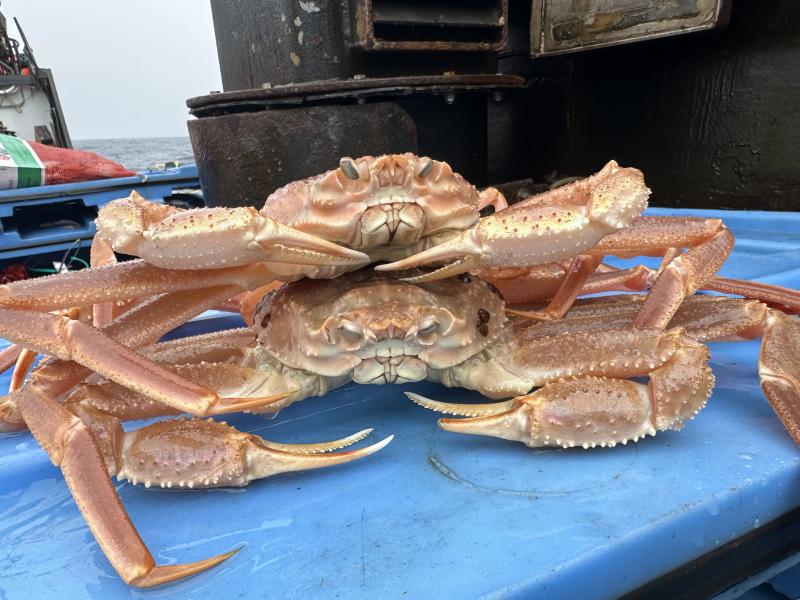
SnowCrabs_NOAA-300x225A recent study has revealed key insights into the dramatic drop in eastern Bering Sea snow crab populations during 2018–2019, marking one of the largest ever recorded marine mortality events. Led by NOAA Alaska Fisheries Science Center biologist Erin Fedewa, the groundbreaking study examined energy reserves in snow crabs before, during, and after this catastrophic decline, offering both explanations for the collapse and hope for recovery.

The research team developed an innovative approach to monitor crab health by measuring energy reserves stored in the hepatopancreas, a specialized organ combining liver and pancreas functions in crabs. This method proved crucial in identifying why billions of snow crabs disappeared from Bering Sea waters. Researchers found that young crabs suffered from starvation due to unusually warm seas and crowded populations competing for scarce food.

The research offers fresh perspectives on what snow crabs need from their habitat. Findings reveal that snow crabs, which typically live in the cold pool of the Bering Sea at temperatures below 2°C, actually require water colder than 0°C to preserve the energy they need to survive. Scientists noted that a marine heatwave added extra stress, since higher temperatures raised the crabs’ metabolic rates while reducing their available food and habitat. These combined factors left many crabs without enough energy to live. The drop in numbers was especially severe among juvenile crabs, threatening the long-term health of the fishery.
Published on:

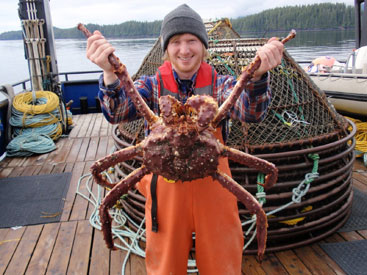
Red_King_Crab-300x225The Alaska Department of Fish and Game (ADF&G) delivered good news to the commercial fishing industry on Monday, October 6, 2025, when it was announced that it is nearly doubling the allowable harvest for the upcoming Bering Sea snow crab commercial fishing season. The increase marks a turning point for an industry that has endured devastating losses over the past several years.

ADF&G has set the catch limit at 9.3 million pounds for the season, representing a substantial increase over last year’s totals. However, the figure remains a reminder of how far the fishery has fallen from its peak. In 1991, crabbers harvested more than 320 million pounds of snow crab from these waters. Even as recently as 2020, the catch limit was set at 45 million pounds before the stock’s catastrophic collapse.

The downturn began in 2021 when more than 10 billion snow crabs vanished from the Bering Sea. The disappearance forced regulators to close the fishery for two consecutive seasons, leaving boats tied to docks and processing plants closed. Researchers attributed the collapse to warming ocean waters driven by climate change, which disrupted the delicate ecosystem these cold-water crustaceans depend on.

Published on:

snow-crab-300x200The Alaska Department of Fish and Game (ADF&G) announced that the Bering Sea snow crab fishery will reopen after being closed for two years, allowing fishermen to harvest approximately 4.7 million pounds of snow crab. This decision follows an assessment that the population of mature male crabs has increased above the threshold necessary to support sustainable fishing.

The 2024/25 Bering Sea snow crab fishery opened in Bering Sea District waters west of 165° W longitude at 12:00 noon on October 15, 2024 and will close at 11:59 p.m. May 15, 2025 in the Eastern Subdistrict (east of 173° W longitude), and close at 11:59 p.m. May 31, 2025 in the Western Subdistrict (west of 173° W longitude).

The reopening of the snow crab fishery comes as a relief to many in the fishing industry, especially those in coastal Alaska communities that rely heavily on the income generated by the snow crab harvest. The fishery was closed for the past two years due to sharp declines in the crab population, which raised concerns about overfishing and environmental changes affecting the crab habitat. In 2021, the ADF&G took the extraordinary step of shutting down the snow crab fishery after population surveys revealed a dramatic crash in crab numbers, likely linked to rising ocean temperatures, reduced sea ice, and ecosystem changes.

Contact Information