 Maritime Injury Law Blog
What US and Norwegian Coast Guard Drills Mean for Alaskan Fleets


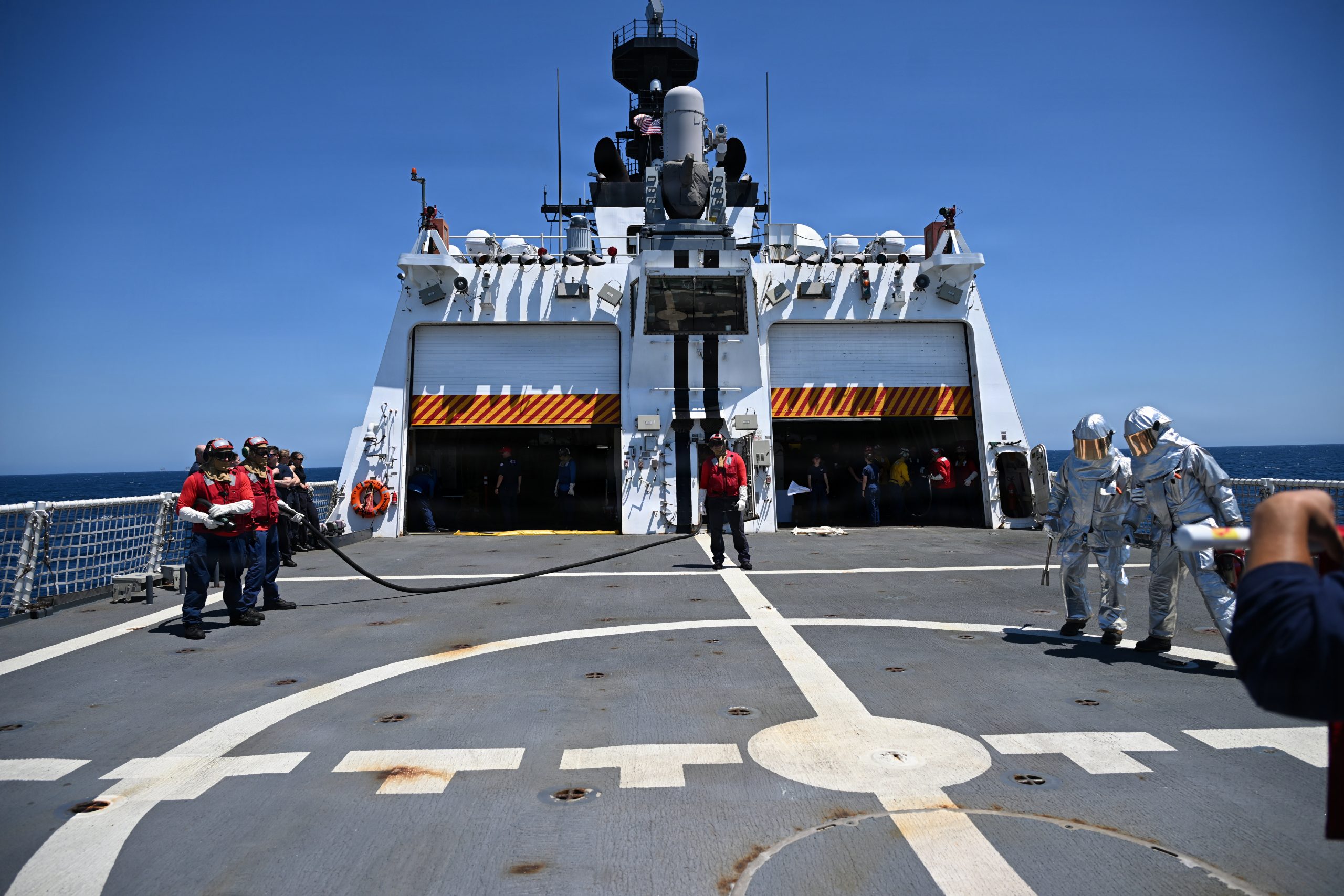
U.S. Coast Guard crew members from the Legend-class national security cutter USCGC Stone (WMSL 758) work alongside Norwegian coast guard crew members from HOPEN during joint training, off the Newport, Rhode Island coast, July 10, 2026. The training allows both crews to build familiarity, share operational expertise and improve coordinated response in Arctic conditions. (U.S. Coast Guard photo by Petty Officer 2nd Class Laticia Sims)
The U.S. Coast Guard has completed a major Arctic interoperability exercise, and the coastlines involved help explain why the training matters so much to those of us on the water. Between July 8th and July 15th, 2026, crews aboard the Legend-class national security cutter USCGC STONE (WMSL 758) worked alongside the Norwegian Coast Guard Vessel HOPEN off the coast of New England and Newport, Rhode Island. The exercise, part of Operation Arctic Cohesion (OAC) 2026, focused on crew exchanges, joint underway training, and shared best practices for Arctic operations, and it was observed by partner nations Canada and Finland as part of the broader Arctic Coast Guard Forum (ACGF).
It is worth noting that Norway, of all nations, is a natural training partner. Norway’s mainland coastline runs about 15,500 miles, but if you count every fjord, inlet, and offshore skerry, the total stretches past 62,000 miles, making it one of the most fragmented coastlines on Earth. A fjord is a long, narrow, glacially carved inlet, flanked by steep cliffs, where retreating ice sheets left behind a deep U-shaped valley that seawater later filled. That terrain, cold water, narrow passages, remote landings, is not so different from the coastline that Alaska’s own commercial fishing fleets navigate every season, where the state’s more than 34,000 miles of coastline (counting islands and inlets) presents many of the same search-and-rescue and vessel-safety challenges.