 Maritime Injury Law Blog
The Comeback of the Yelloweye Rockfish


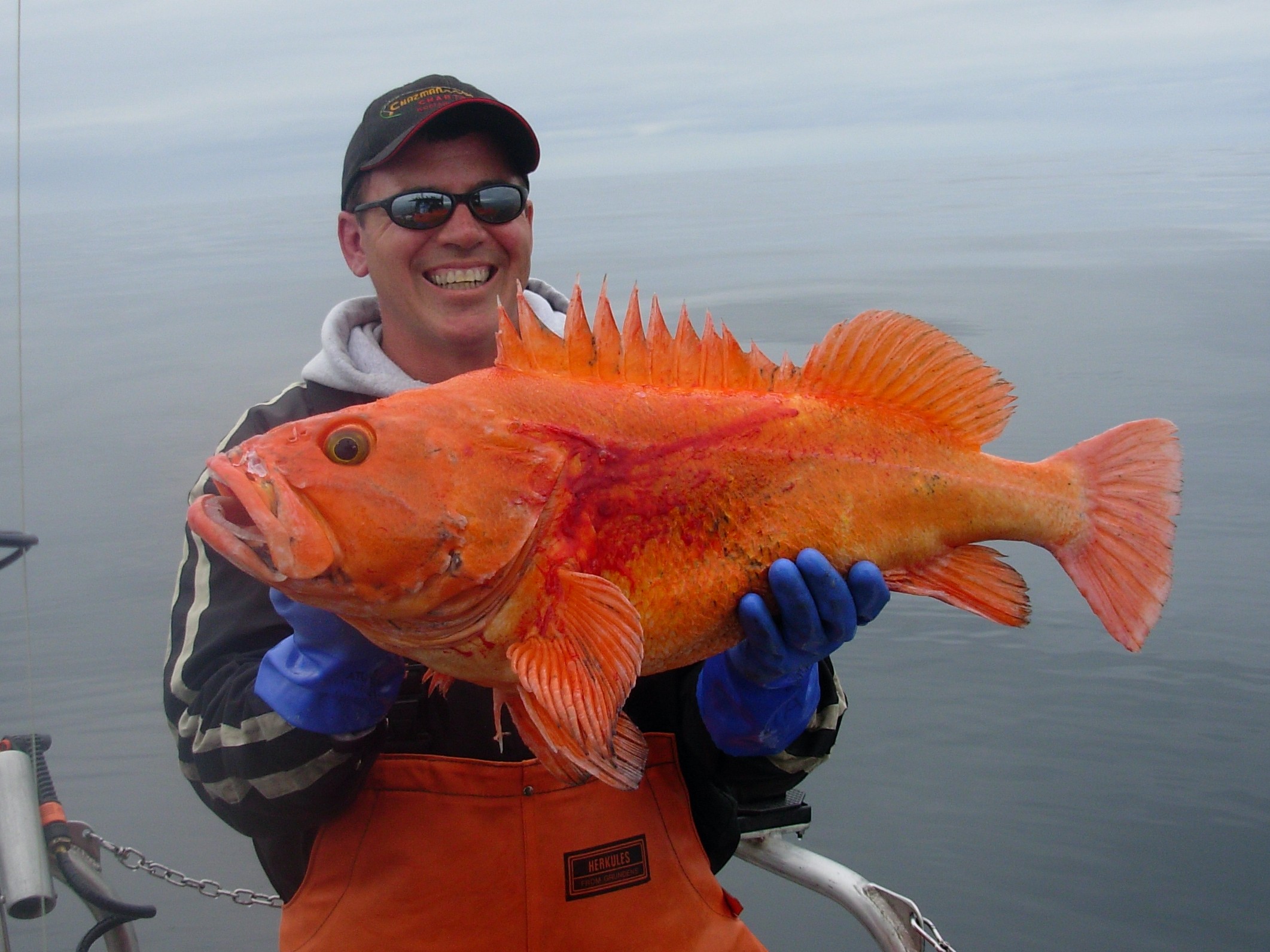 Most folks who grew up along the Pacific Northwest coast remember rockfish on the dinner table. The firm, mild white fillets were a fixture at fish counters and family tables as they were sturdy enough to fry, bake, or simmer in a chowder. That firm white flesh also worked well with butter, garlic, and herbs. Of the many rockfish species, the yelloweye, often sold as “red snapper,” was considered a high-quality protein. After a quarter century off the menu, it is on its way back.
Yelloweye rockfish are hard to mistake, with bright orange bodies, golden eyes, and rough ridges above each eye. They are among the largest rockfish, reaching about three feet in length and over 30 pounds, and they live on rugged, rocky reefs where they hunt smaller fish, crab, and squid. They reside in the East Pacific and range from Baja California to Dutch Harbor in Alaska. What sets them apart is their lifespan, as yelloweye rockfish can live as long as 147 years. They grow slowly, and it takes about 20 years before even half of them are old enough to reproduce.
That slow growth is what made them vulnerable. Catches peaked from the late 1970s through the late 1990s, and the population could not be sustained. In 2002, yelloweye rockfish were declared overfished off the West Coast, and keeping them was prohibited. With an average generation time of 44 years, fishery managers projected only a 50 percent chance of recovery by 2027, even if all fishing stopped.
That estimate proved very close. Federal managers have declared the stock rebuilt, and Oregon’s commercial fishermen can harvest and sell yelloweye rockfish again starting in 2027, though the amounts allowed in 2027 and 2028 will be modest. Speaking with fishermen in Port Orford, Oregon Department of Fish and Wildlife fishery manager Troy Buell acknowledged there was a time he never expected to see a legally harvested yelloweye rockfish again. Recreational fishers may get a chance too, as the state has been gathering public input.
Alaska manages its yelloweye rockfish separately. In Southeast Alaska, a steep decline in rockfish biomass since the mid-1990s led the state to close the sport, commercial, and personal use fisheries in 2020. Recovery there has been gradual. A small commercial fishery reopened in parts of Southeast Alaska in 2025, and visiting fishers now have a short summer season. In Cook Inlet and Prince William Sound, fishers cannot keep yelloweye rockfish in spring and early summer, a closure designed to protect females carrying young. Across the state, fishers are encouraged to use deepwater release devices, which lower rockfish back to depth and help them survive the pressure change of being reeled up.
The reopening is also important to the scientists who study this fishery. Landed fish give researchers lengths, maturity data, and ages, which are read from otoliths, tiny ear stones that lay down growth rings much like a tree. That information will help track the rebuilt population and set future catch limits.
Some recoveries take decades, not seasons, and the yelloweye rockfish is proof that patience can pay off. When it returns to Northwest fish markets, it will be a success story worth noting.