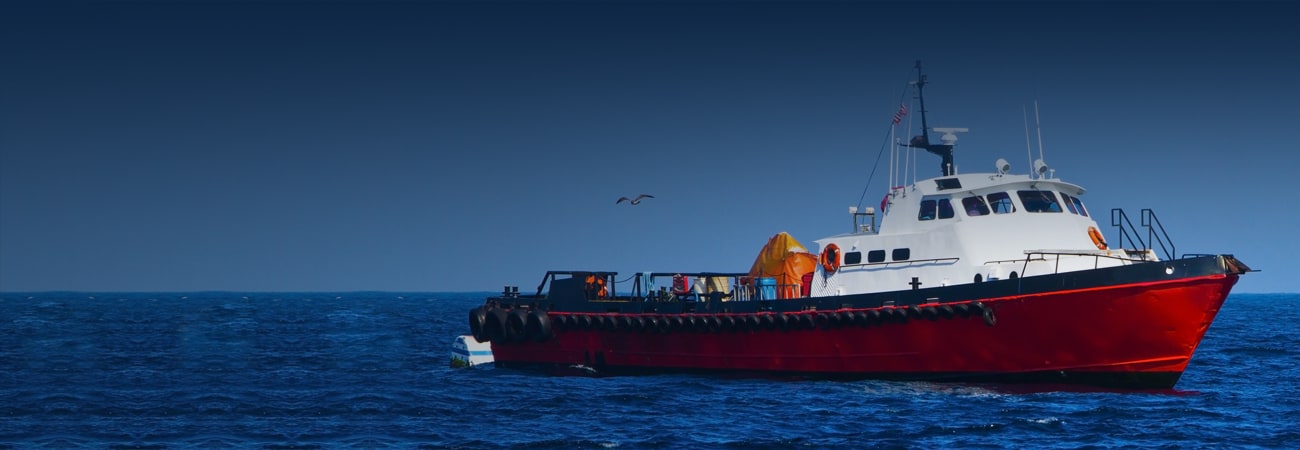
Boat on the sea
Published on:

Crew from the 82-foot F/V NORTHERN PRIDE called out a Mayday around 2 pm on April 21, 2015 and abandoned ship due to a fire in the engine room. The Good Samaritan F/V DANCER relayed the Mayday to the Coast Guard who sent a Kodiak, Alaska Jayhawk helicopter crew to the life raft located off Stevenson Entrance, 60 miles north of Kodiak.

“We couldn’t fight the fire; it was too smoky; it was scary,” said Scott Beckstrom, captain of the NORTHERN PRIDE. “So we made a distress call, put on our survival suits, manually launched the life raft and got in safely, turned on the EPIRB and waited for our heroes who came within a half hour.”

Coast Guard Petty Officer 3rd Class Lindsey Green, operations specialist, Sector Anchorage command center said, “The crew of the NORTHERN PRIDE was prepared and took the necessary steps to ensure their safety when their vessel caught on fire. Emergencies can occur at any time and having the right safety equipment is critical when operating in Alaska’s extreme environments.”

Published on:

An electrical fire broke out onboard the passenger ferry VICTORIA CLIPPER on April 16, 2015 while en route from Victoria BC to Seattle, WA. VICTORIA CLIPPER crew called the Coast Guard around 7:15 pm to report the fire in a forward space housing the anchor windlass. The ferry was located off Port Townsend with 223 passengers on board when the fire broke out. Ferry crew extinguished the fire and no one was injured.

The Coast Guard notified the WA State Ferry Operation Center and the Seattle Fire Department to assist if necessary, and a Coast Guard helicopter and patrol boat crew escorted the ferry safely back to Seattle.

“The response of the VICTORIA CLIPPER crew was exceptional,” said Lt. Raffael Shamilov, command duty officer at the Coast Guard 13th District Command Center in Seattle. The Coast Guard will investigate the cause of the fire.

Published on:

In the space of three days, the WA Coast Guard recently terminated the voyages of two fishing vessels: The FV DAYBREAK in the Strait of Juan de Fuca and a state-registered fishing vessel near Anacortes.

The F/V DAYBREAK lacked a life raft, visual distress signals, and enough survival suits. The Coast Guard escorted the vessel to Neah Bay. The vessel near Anacortes lacked a sound producing device, enough life jackets, and a current fishing vessel inspection. The boat was escorted to Anacortes.

“It’s imperative for mariners to have crucial safety equipment on board,” said Dan Hardin, 13th Coast Guard District/Pacific Northwest commercial fishing vessel safety coordinator. “The chances of survival are immediately lessened when this vital gear is either not on board or inoperable.”

Published on:

The U.S. National Transportation Safety Board (NTSB) released its “Safer Seas 2014: Lessons Learned from Marine Accident Investigations” report on April 1, 2015. 23 major marine accidents from many U.S. maritime regions are summarized and lessons are analyzed from each accident.

Issues in the 43-page report focus on understanding vessel control systems, passenger safety during critical maneuvers, vessel maintenance, and crew training.

Safer Seas 2014 is available on the NTSB website at:

Published on:

On March 14, 2015, a crew member on the 65′, 1000 horsepower tugboat SEA BEAR radioed for help on its way back home from the Fire Island area to New York and said the ship was taking on water and sinking. When the Long Island Coast Guard boat crew sped to the scene about one mile south of Fire Island, they found a debris field with three men in survival suits clustered together. The survivors were treated for hypothermia and taken to a hospital. A Good Samaritan tugboat that had responded to the urgent marine information broadcast (UMIB) found the dead fourth crewmember.

Water temperature at the time was reported to be about 40 degrees Fahrenheit.

“Our deepest sympathies are with the family and friends of the deceased,” said Capt. Edward Cubanski, commander Coast Guard Sector Long Island Sound. “I also applaud our dedicated and professional search and rescue crews, our port partners, local EMS, and police who responded on scene and ashore.”

Published on:

Sean O’Callahan, 29, was found deceased in his bunk aboard the F/V ALASKA DREAM as it headed out to fishing grounds off of Kodiak Island on February 28, 2015. The boat turned around when O’Callahan’s body was found, and Alaska State Troopers were notified of his death. Although nothing has been called suspicious, his remains were sent to the State Medical Examiner’s office in Anchorage for autopsy. The cause of death is still unknown.

According to Alaska Native News, O’Callahan, a resident of Florida, had fished in Alaska halibut, cod, salmon and crab fisheries.

His next of kin has been notified. They’ve announced that some of his ashes will be scattered at the Harbor Pier in Kodiak, and the rest will be scattered in Jacksonville Beach, Florida.

Published on:

Crew on the 35-foot F/V ALASKA PRIDE radioed the Coast Guard at 4:30 am on March 12, 2015 after the boat began taking on water in Izhut Bay near Kodiak, Alaska. The boat’s pumps were not able to keep up with the flooding caused by a possible puncture in the bow. A Kodiak Jayhawk helicopter crew flew to the vessel and delivered a dewatering pump to the four crewmembers. The Coast Guard communicated with the ALASKA PRIDE crew every fifteen minutes as the Good Samaritan vessel ROSELLA escorted them back to Kodiak for repairs. No injuries were reported.

“The capability of our aircrews to transport dewatering pumps to vessels at sea can often prevent a small problem from turning into a life-or-death situation,” said Coast Guard Petty Officer 3rd Class Joshua Yates, watchstander, Sector Anchorage. “Mariners should always be proactive and notify the Coast Guard immediately if an emergency occurs.”

Weather on scene was reported as 5-foot seas and 17 mph winds with temperatures in the teens.

Published on:

The cover photo of Coast Guard Safety Alerts 1996-2014 is chilling: A large ship is awash in ocean water and is about to sink. The report is a compilation of safety alerts on a myriad of maritime safety issues such as “Attention on Deck! Commercial Fishing Vessels,” “Unprepared Safety Equipment,” “Bow Riding in Heavy Weather,” “Watertight Doors: Close Them and Dog Them,” and many more. Read, apply, and keep a safe ship for all.

http://www.uscg.mil/hq/cg5/cg545/alerts/96_14SA.pdf

Published on:

Commercial Dungeness crab fishermen on the Washington and Oregon Coast earned $3.10/pound at the beginning of the season in December 2014. By Christmas they received $4.50/pound, and by the middle of February 2015, prices jumped to $9/pound. Why the nearly three times price increase?

One reason is this year’s harvest is down but demand is still high. According to Hugh Link, executive director for the Oregon Dungeness Crab Commission, last year Oregon fishermen caught 14 million pounds by the middle of February; this year they caught 7 million pounds. The Chinook Observer reported that this year Washington caught 6.2 million pounds by February 5. The quality of crabs has been the best in years, but there aren’t that many of them.

Crab is served more often at holiday parties and dinners during Christmas and New Year’s, so demand is higher. China’s New Year was February 19 and their crab demand was very high. Demand coupled with crab scarcity equals high payment to crab fishermen.

Contact Information