 Maritime Injury Law Blog
A New Book Revisits the Sinking of Scandies Rose


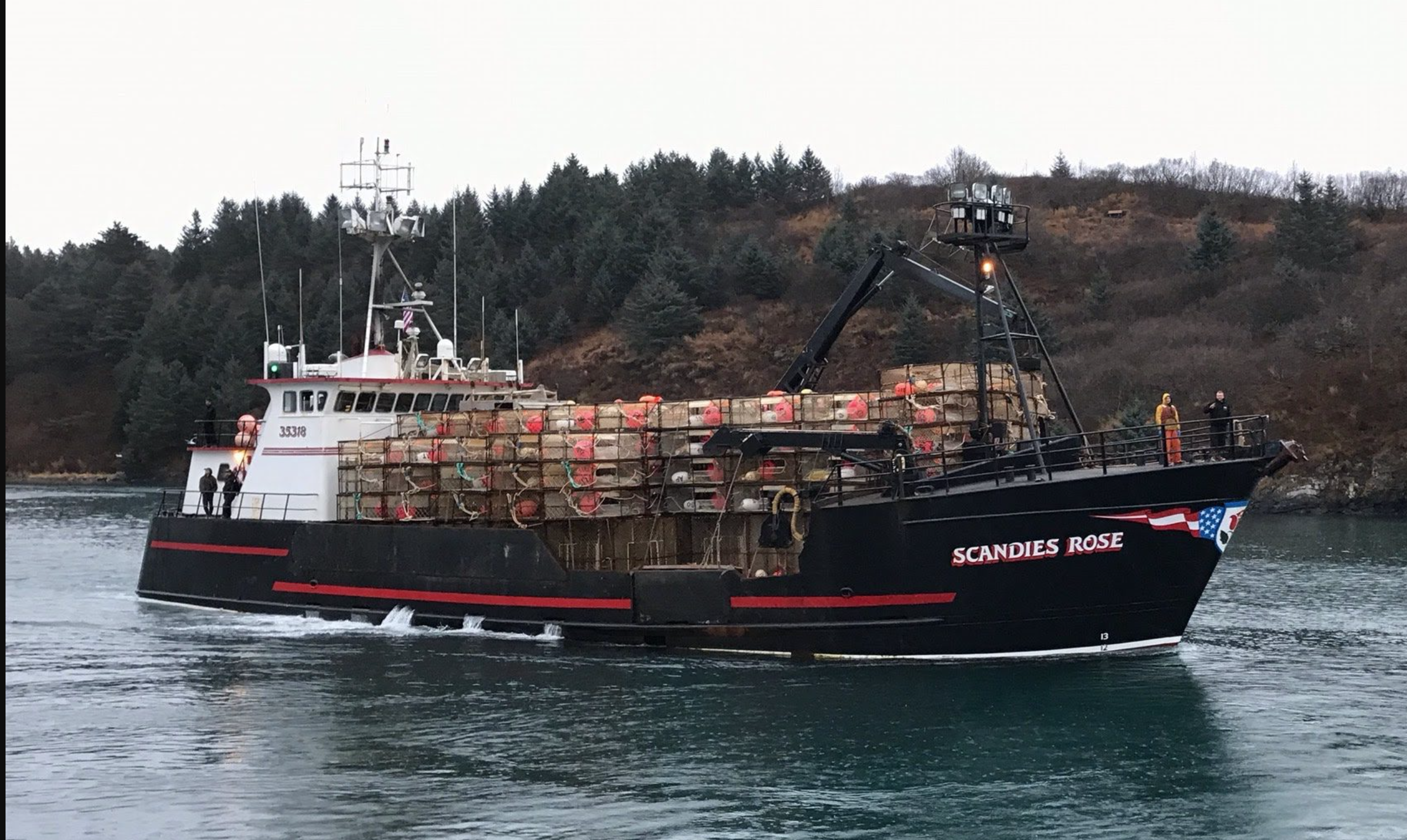 On New Year’s Eve 2019, the 130-foot F/V SCANDIES ROSE went down in heavy weather and freezing spray about 170 miles southwest of Kodiak. Five crew members were lost; Captain Gary Cobban Jr., his son David Cobban, Seth Rousseau-Gano, Arthur Ganacias, and Brock Rainey. Two men, Dean Gribble Jr. and Jon Lawler, were washed off the hull, found a life raft, and waited about five hours for the U.S. Coast Guard.
Nearly seven years later, Decker Watson has told the story at book length in The Sinking of the Scandies Rose. Watson, a longtime Deadliest Catch producer, knows this fleet well. The book follows the crew and their families, the vessel, the rescue, and the Marine Board of Investigation.
For anyone who has broken ice off a deck or waited on news of someone at sea, it will not be an easy read. However, it is an honest one.
Stacey & Jacobsen, PLLC represented both survivors after the sinking. We share that so readers understand our connection to this story, not to claim any part of it. It belongs to the men who were aboard and to the families who lost them. We were deeply saddened by Jon Lawler’s passing in 2021, and we continue to think of all seven crew members and their families.
Federal investigators concluded that heavy icing, combined with stability instructions that did not reflect the actual vessel, led to the capsizing. Like the F/V DESTINATION, lost in 2017, the F/V SCANDIES ROSE carried crab pots heavier than its stability report assumed. Newer pots can weigh up to 700 pounds, compared with roughly 500 for older designs, and other small additions of gear and equipment over time shift a boat’s center of gravity.
Congress mandated stability training for fishermen in the U.S. Coast Guard Authorization Act of 2010. Yet as recently as 2024, the U.S. Coast Guard’s own fishing safety advisory committee noted the requirement had still not been implemented, and most Alaska fishing vessels have no formal review of their stability calculations.
Under the doctrine of unseaworthiness, a vessel owner must provide a vessel, equipment, and crew reasonably fit for their intended use, even when no one knew of the problem. In this case, the captain and his son were lost alongside their crew. As the NTSB noted, no one aboard failed to do their job. The stability information they relied on described a different boat. When systemic failures like these occur, maritime law provides specific avenues for accountability.
The Jones Act separately allows injured seamen, and the families of those lost at sea, to bring claims when an employer’s negligence contributes to an injury or death. Crew members who were hurt or taken ill while working on a vessel are also entitled to maintenance and cure, meaning living expenses and medical care until they reach maximum recovery.
After a loss like this, owners often file a limitation of liability action in federal court, as happened here, which requires survivors and families to bring their claims within that proceeding.
Commercial fishing in the Bering Sea and the Gulf of Alaska will always carry inherent risks. But as Watson points out in his closing pages, some risks can be avoided, and the lessons of the F/V SCANDIES ROSE are worth carrying forward.