 Maritime Injury Law Blog
Six Missing After Cargo Vessel Mariana Capsizes in Typhoon Sinlaku


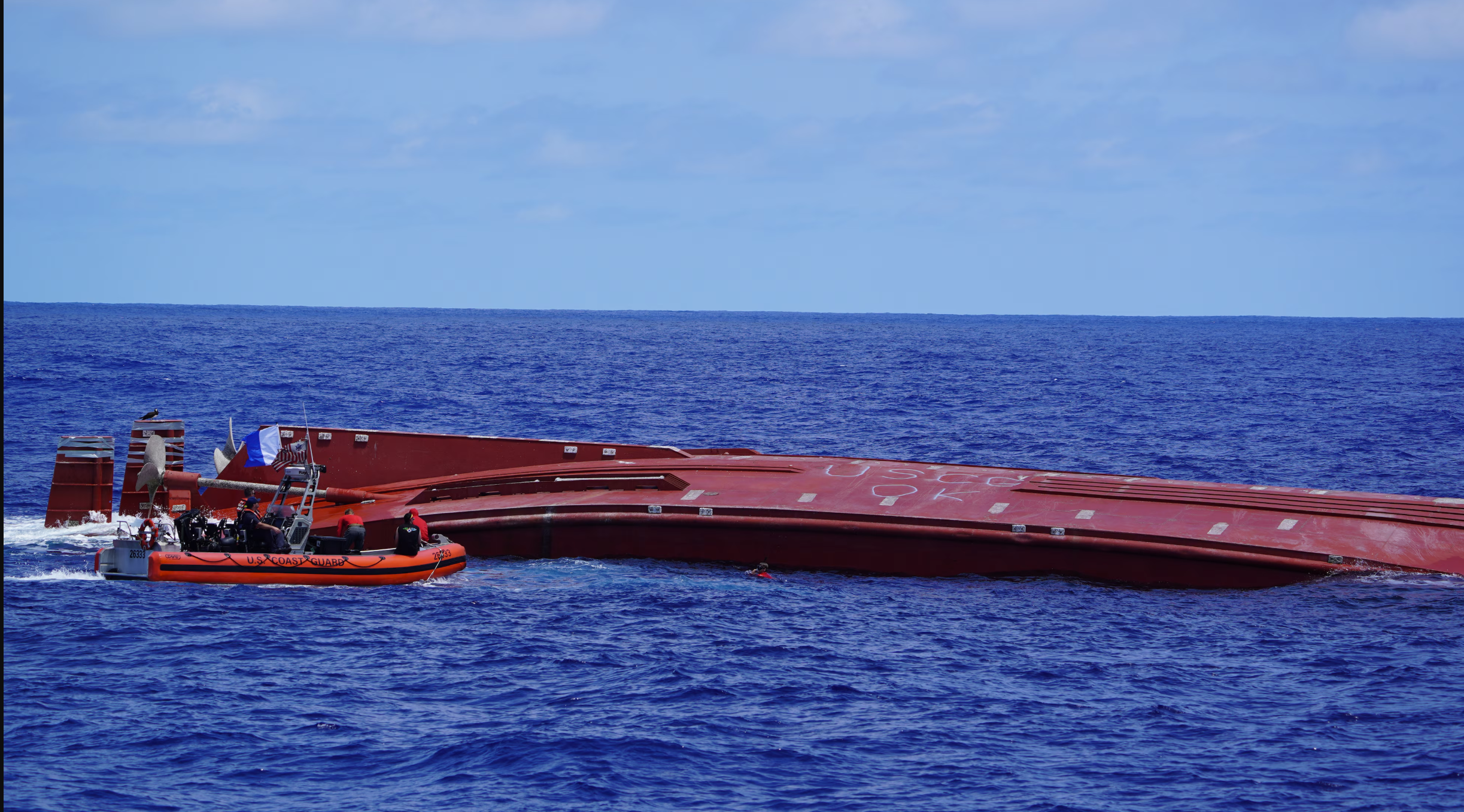 On Wednesday, April 15, 2026, watchstanders at the Joint Rescue Coordination Center Honolulu received a report from the vessel manager of the M/V MARIANA, a 145-foot U.S. registered dry cargo ship that regularly transports goods between Guam, Tinian, and Saipan. The vessel’s starboard engine was disabled while carrying six people, leaving it stranded approximately 140 miles north-northwest of Saipan. The crew reported the disabled engine just as Typhoon Sinlaku approached the region.
The U.S. Coast Guard established an hourly communication schedule with the M/V MARIANA through the vessel’s manager. On Wednesday evening, communications went silent, and contact was never reestablished.
On Thursday morning, a U.S. Coast Guard Air Station Barbers Point HC-130 Hercules airplane crew launched from Guam to search for the vessel but were forced to return to Guam due to heavy winds in the search area. That same day, Super Typhoon Sinlaku made landfall on the island of Tinian with sustained winds of 145 mph and torrential rain. The storm pummeled the region for roughly 48 hours. On Saipan, it triggered flooding, tore roofs from buildings, and overturned vehicles. More than 15,000 residents lost power. The Northern Marianas government requested an expedited federal disaster declaration.
By Friday, April 18, weather conditions in the search area had improved, allowing rescue operations to resume. At 1:12 p.m., a U.S. Coast Guard HC-130 aircraft crew, conducting an aerial search, located an overturned vessel approximately 34 nautical miles northeast of Pagan Island. This location was roughly 100 nautical miles northeast of the M/V MARIANA’s last reported position.
On Saturday evening, a second HC-130 crew sighted debris in the water, including a partially submerged, partially inflated life raft, approximately 95 nautical miles northeast of the overturned hull. The vessel itself had drifted 26 nautical miles from where it was first sighted, carried by currents and wind.
On Sunday evening, April 19, a U.S. Air Force HC-130 from the 31st Rescue Squadron at Kadena Air Base in Okinawa arrived on scene and deployed pararescuemen, divers, and small boats. The team confirmed that the capsized vessel was indeed the M/V MARIANA. Divers conducted a comprehensive exterior examination of the hull. An underwater remotely operated drone was deployed to search the interior. U.S. Air Force divers then recovered one deceased crew member from inside the capsized vessel. Five crew members remain missing.
The search that followed has been one of the largest multinational maritime rescue operations in recent Pacific history. Crews have covered more than 100,000 square nautical miles, an area roughly the size of California. Search patterns have extended 250 miles north of Saipan, into the open ocean north of the Northern Mariana Islands chain. As of April 28th, 2026, the search was still active, as five crew members remained unaccounted for.
The families of the M/V MARIANA’s crew are living through every maritime worker’s nightmare; a vessel missing at sea, compounded by delays in response caused by a natural disaster, with the outcome remaining uncertain.
“Our hearts are with the families of the Mariana crew members,” said Cmdr. Preston Hieb, the search and rescue mission coordinator for Coast Guard Oceania District.
When crew members are injured or lost at sea, the legal questions that follow are as serious as the human ones. The Jones Act provides significant protections for maritime workers who are injured or lost in the course of their employment, including the right to pursue claims for negligence, unseaworthiness, and maintenance and cure. The families of lost mariners may also have claims under the Death on the High Seas Act, which applies to fatalities occurring more than three nautical miles from U.S. shores.