 Maritime Injury Law Blog
NOAA Budget Cuts and Fishing Safety: Your Legal Rights When Training Programs Vanish


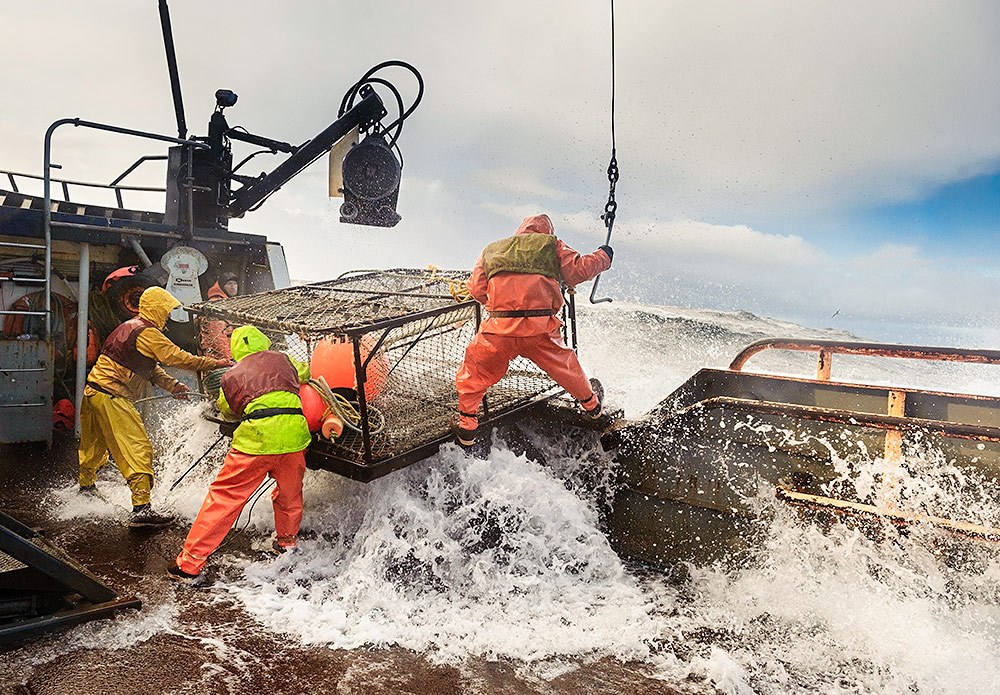 Earlier this year, we reported about how proposed cuts to the National Oceanic and Atmospheric Administration (NOAA) and the National Weather Service were putting commercial fishermen in Alaska, Washington, and Oregon at greater risk by degrading marine weather forecasts. That threat has not gone away, and now a new federal budget proposal makes clear that it is deepening. This time, the target is not just forecasting. It is the safety training programs that have quietly kept Pacific Northwest and Alaska fishermen alive for decades.
The proposed federal fiscal year 2027 budget calls for a $1.6 billion cut to NOAA’s overall budget, a 32 percent reduction that would eliminate entire programs. Congress rejected an identical proposal for FY2026, but the proposed cuts keep coming. The agency has experienced significant staffing reductions due to recent layoffs and attrition. Alaska fishermen reported greater uncertainty about storm forecasts during the 2025 season, and the conditions driving that uncertainty have not improved.
What is different this year is that the scope of that threat has expanded. The proposed cuts are not limited to weather forecasting offices and buoy networks. They also target the federal programs that fund commercial fishing safety training, specifically the Commercial Fishing Safety Research and Training program and the National Institute for Occupational Safety and Health (NIOSH) fishing industry programs.
AMSEA, the Alaska Marine Safety Education Association, is well known among commercial fishing crews in Alaska. For more than three decades, AMSEA has provided survival training, drills, and education to Alaska’s fishing community. The organization teaches crews how to respond to vessel flooding, how to properly use immersion suits and life rafts, and how to activate Emergency Position Indicating Radio Beacons (EPIRBs), the critical signaling devices that alert rescuers to your exact location when a vessel is in distress. Rescue swimmers, U.S. Coast Guard crews, and maritime lawyers all know what a difference that training makes when something goes wrong at sea.
AMSEA is already operating under strain. The organization is set to run in 2026 on limited state funding and the remaining balance of prior-year federal grants. Without renewed federal investment, training availability in fishing communities across Alaska will drop sharply, not at some point in the future, but now. There are now fewer training courses and drills available, resulting in a reduced number of fishermen who are prepared for an emergency.
Commercial fishing is already one of the most dangerous occupations in the United States. Fatality rates on Alaska fishing vessels run many times higher than the national average for all industries. The safety infrastructure that exists is not a luxury. It is the framework that has driven fatality rates down over the past two decades. Cuts to that framework do not just affect statistics. They affect real people on real vessels.
Small vessels and rural fleets are hit hard by any reduction in public safety infrastructure. While larger operations can afford private weather services or in-house safety training, most Alaska fishing families cannot. Deckhands and crew on various vessels rely on publicly funded programs for essential information and training to stay safe.
It is important for fishermen and their families to understand that federal budget cuts do not reduce the legal obligations of vessel owners and operators. Under the Jones Act and general maritime law, vessel operators are required to maintain seaworthy vessels and provide a safe working environment for their crews. That includes providing adequate safety training and properly functioning emergency equipment.
A vessel owner may be found negligent or liable for unseaworthiness under maritime law if neglecting crew training, safety equipment maintenance, or adequate preparation leads to injury or death, regardless of federal program funding. The reduction of publicly available training programs may, in fact, make it more important for vessel owners to demonstrate that they have taken steps to train their crews.
If you work on a commercial fishing vessel in Alaska, Washington, or Oregon, there are important steps worth taking regardless of what happens in Washington, D.C.
- Check your vessel’s EPIRB. Make sure it is registered, not expired, and that you know how to activate it manually. An unregistered or expired EPIRB is a serious liability in an emergency.
- Verify your immersion suits. Suits should be inspected regularly, fit properly, and be accessible to every crew member. In cold Alaskan waters, the difference between a working suit and a failed one is often survival.
- Seek out AMSEA training while it is available. AMSEA courses are offered throughout Alaska and cover survival skills, emergency response, and equipment use. With funding uncertain for 2026, availability may decrease. Take advantage of training opportunities now.
- Document safety deficiencies on your vessel. If you are a crew member who has raised safety concerns with your employer and been ignored, keep a record. Documented complaints about unsafe conditions are relevant evidence in any future maritime injury claim.
The lawyers at Stacey & Jacobsen, PLLC understand both the legal landscape and the realities of commercial fishing. If you or a family member has been injured at sea, whether due to a lack of safety training, defective equipment, an unseaworthy vessel, or employer negligence, we are here to help. Contact us for a free consultation: 1-877-DECKLAW (1-877-332-5529). There is no fee unless we recover compensation for you.