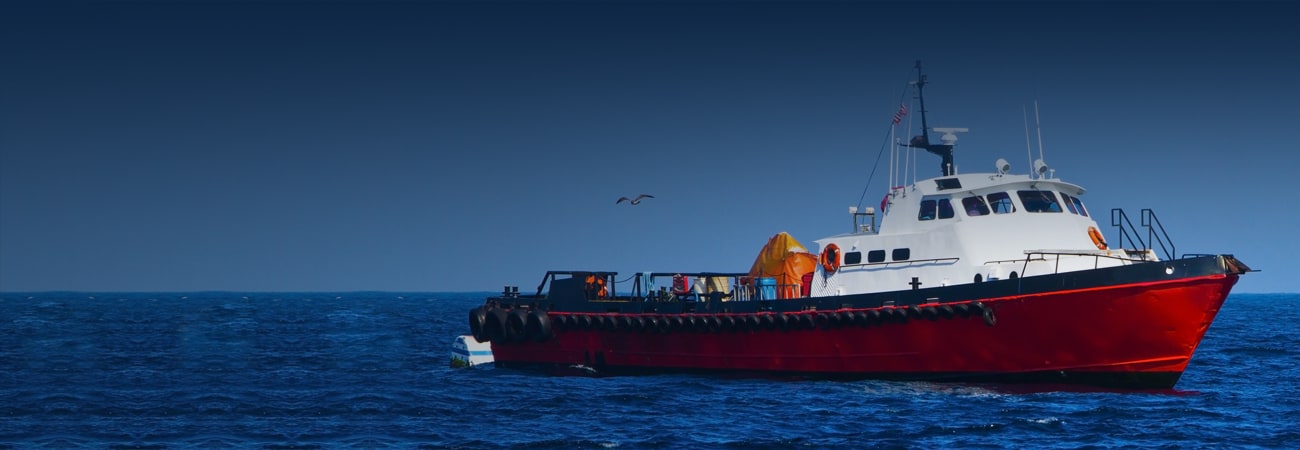
Boat on the sea
Published on:

On the evening of March 10, the Coast Guard received word that one of the MISS COURTNEY KIM crew had sustained numerous injuries when a crab pot fell on him. They were near Sanak Island, which is south of King Cove, when this happened. King Cove has the nearest clinic to that area, and is also the crew’s homeport, so 58-foot MISS COURTNEY KIM headed there pending a morning medevac.

The morning medevac was postponed until after an infant suffering from respiratory distress, in an unrelated emergency, was first medevaced from King Cove to Cold Bay. The Coast Guard helicopter crew then returned to King Cove for the crewman and transported him to Cold Bay. From there, the man was taken to Anchorage by commercial transportation for further medical treatment.

The man’s identity and current condition have not been released. Hopefully, both he and the infant are recovering well at this time.

Published on:

The crews of 30-foot F/V MISS JANA and 50-foot F/V EQUINOX, both hailing out of Cordova, AK, and owned by Leslie P. Allen of Valdez, came to the rescue of three people whose 36-foot Belltech 5 was sinking near Valdez Wednesday night.

The Coast Guard issued an Urgent Marine Information Broadcast as soon as the Belltech 5 crew alerted them via VHF 16 what was happening. Fortunately, MISS JANA and EQUINOX were close enough to make the difference.

The Belltech 5 had already sunk with her crew already in the water when MISS JANA arrived to pull them out. The three rescued men were then transferred to EQUINOX, which in turn transferred them to the Coast Guard for further transport for medical care. Conditions at that time included snow, 7mph winds, and 3-foot seas.

Published on:

On Tuesday, February 25, the Coast Guard was called in to medevac a crewman, aged 25-30, for a severe injury to his left hand. According to the record, the Coast Guard medevaced the man from OCEAN PHOENIX via helicopter to Cold Bay, and from there he was taken to Providence Medical Center in Anchorage.

Reports indicate that this happened about 85 miles northwest of Cold Bay. The crewman’s name and current condition have not been released. At the time of his medevac, winds were at 35mph winds with 10-foot seas.

OCEAN PHOENIX, a 680-foot fish processor owned by Premier Pacific Seafoods of Seattle, has had a slew of bad luck this month. On February 16, one of the crewmen was medevaced for an eye injury. On February 13, a 25-year-old crewmember was medevaced because she was experiencing chest pains.

Published on:

About 34 miles northwest of Cold Bay, Alaska, on Sunday morning, fish processor OCEAN PHOENIX crew members contacted the Coast Guard requesting a medevac for a 30-year-old crewmate who had suffered an eye injury. The Coast Guard arrived to medevac the injured man via Jayhawk helicopter for emergency care in Cold Bay. The man was then transported by commercial airline to Anchorage for further treatment.

Seas during the medevac were reported to be eight to ten feet with low visibility and 28mph winds, including intermittent squalls.

The man’s name and current condition have not been released.

Published on:

Seattle-based factory trawler KATIE ANN had her windows blown out at around 3:30 a.m. on Saturday, July 8, thanks to high winds in a storm which also caused damage on land over the weekend. KATIE ANN was working northwest of Unimak Island at the time.

KATIE ANN fortunately did not lose power and was able to head to Unalaska without Coast Guard assistance, reaching Unalaska that afternoon. According to reports, about six crew members were injured and were seen at the local clinic once KATIE ANN arrived in port; none required medevac.

Published on:

The crew of 98-foot T/V EAGLE contacted the Coast Guard in Seattle just after 8:00 a.m. today, asking for assistance with a crewmate who had suffered a ribcage injury while on board in Elliott Bay. The injured man was transferred in a litter from EAGLE to a Coast Guard response boat and then taken to the emergency team waiting at the Seattle Fire Station pier.

The man’s name or the exact nature of his injury hasn’t been released, but according to reports, he was heaving a line when he was injured. Records indicate that EAGLE is owned by Pacific Coast Maritime, Inc., of Seattle.

Published on:

The U.S. Coast Guard is authorized to board vessels at sea in order to do vessel safety inspections, and if discrepancies are found, they are authorized to escort the vessel and crew back to port and deny future voyages until those discrepancies are resolved.

An example of this is when the Coast Guard conducted an at-sea boarding of F/V ARCTIC STORM this past Thursday. According to the Coast Guard, there were six counted safety violations on ARCTIC STORM, including that the vessel life raft and hydrostatic release had expired back in 2006. This event, which is fortunately actually a non-event, serves as a good reminder to keep up with safety regulations while out fishing.

The Coast Guard Authorization Act of 2010, Title VI, and the Coast Guard and Maritime Transportation Act of 2012, Title III, encode current laws and regulations regarding safety requirements on a fishing vessel. This gear must be kept in good repair, easily accessible, fit to the person using it, and within the expiry. The expiry is important because rubber, adhesives, fabrics, and many other materials used in rafts, personal flotation devices (PFD), and immersion suits eventually deteriorate in the extremes of weather and sea. Likewise, inflation propellants lose their pressure and efficacy over time. It can be and often is a matter of life and death to have appropriate safety gear that doesn’t come apart at the seams when you most need it.
Continue reading

Published on:

On January 20, 55-foot F/V ECLIPSE collided with the Yaquina Bay south jetty. Three crewmen were aboard the vessel at the time of the accident. One crewman was lifted from the vessel by a Coast Guard helicopter and another crewman reached shore by climbing onto the jetty and then making his way to shore. The captain of the vessel stayed aboard and was able to dewater with the assistance of the Coast Guard. The cause of the accident is unknown at this time. Initial reports did not identify any injuries to the crew of the ECLIPSE.

Just a day later, January 21, 62-foot F/V JOE MARIE ran aground on the Chetco Jetty near Brookings, Oregon. Four crewmen were aboard the vessel at the time of the accident and all are reported safe after being rescued from the vessel by a Coast Guard Motor life boat.
The Coast Guard has both incidents under investigation and reminds all mariners that a marine band radio is an important tool to utilize in the event of emergency situation. A mayday message issued through VHF-FM Channel 16 can be heard by other mariners in the area who may be able to provide valuable assistance.

Published on:

Recently, during a Port State Control inspection of an oil tanker, the personal gas safety meters of one member of the Coast Guard and one of the tanker crew went off when the crew member opened the valve to a pressurized tank holding Grade E Sour Crude. Sour crude oil contains a high amount of sulfur (over 0.5%), and some of this sulfur occurs as hydrogen sulfide (H2S) gas. Reported to have been standing no more than two feet downwind of the valve release, the Coast Guard member suffered severe H2S exposure symptoms over the next few days, resulting in renewed warnings by the Coast Guard on this serious danger.

You know that “rotten egg” hydrogen sulfide odor when you smell it at low levels, even below one part per million, but if you smell it in enough quantity, you probably won’t smell it for long. That’s because, at 100ppm or above, it quickly paralyzes the nerve centers inside your nose. If you don’t get away fast enough, other parts of your body become paralyzed, in the worst cases leading to unconsciousness, coma, and death. Even 10ppm may pose a health risk, and 50-100ppm is enough to overcome a person. At lower levels, H2S exposure symptoms include irritated eyes, nose, throat, and lungs. Higher levels of H2S include headache, dizziness, nausea, and vomiting. These symptoms may have a delayed onset of hours or days, as the unfortunate Coast Guard member mentioned above experienced.
Continue reading

Published on:

On January 9, off Cold Bay, Alaska, a 50-year-old crewman aboard Seattle-based, 50-foot PAVLOF became ill and required a Coast Guard medevac for health care. The Coast Guard helicopter picked the crewman up about 55 miles northwest of Cold Bay and transported him to the Cold Bay Clinic, whence he was further transported to Anchorage. Apparently, the man was suffering from a staph infection. Weather at the time of his medevac was reported as two-foot seas and 17mph winds.

That same day, 74 miles southwest of St. Paul, Alaska, a crewman aboard PROWLER, which is a 109-foot vessel based in Petersburg, required emergency medical care for a left-eye injury. This man was taken aboard Coast Guard Cutter Munro for assessment, whereafter he was airlifted to St. Paul for treatment. Weather at the time of his medevac was reported as calm seas, 11mph winds, and rain showers.

Whether taken ill or injured while in the service of a vessel, the vessel owner is normally responsible for “maintenance and cure,” which covers a small daily stipend and all reasonable medical care until maximum medical cure has been reached. If you have been injured or taken ill while working on a fishing vessel and wish to learn more about your rights, please contact us.

Contact Information