Articles Posted in Columbia River

Published on:

Regatta_2026_Logo-236x300Every August, the town of Astoria, Oregon, celebrates the Columbia River, the sea, and the people who have spent generations working it. The Astoria Regatta Festival has been a hometown tradition since 1894, which makes it one of the oldest festivals in the Pacific Northwest, and the oldest celebration in Oregon’s oldest city. This longevity does not happen by accident. It happens because a community keeps deciding, year after year, that their maritime story is important and worth sharing and remembering.

The Astoria Regatta celebrates the area’s maritime tradition. Commercial and recreational boaters alike demonstrate the pride they have in this tradition through land and sea parades, search and rescue demonstrations, boat races, and a Seafarers’ Memorial. Through these events and the Regatta, the community pays homage to the hardworking men and women who built this industry, many of them multi-generational family mariners, and the excitement to continue the tradition for generations to come.

To understand why this festival matters, one must understand the river. Astoria sits where the Columbia meets the Pacific, a stretch of water that has carried Native American canoes, tall-masted clipper ships, U.S. Navy vessels, U.S. Coast Guard cutters, and generations of fishing boats. It is not an easy river to navigate. The bar at the mouth of the river is one of the most dangerous stretches in the world, earning it the nickname “Graveyard of the Pacific.” Every person who has piloted a boat across this bar, whether for a living or for pleasure, knows it demands respect and patience. The Regatta was born out of that knowledge and practice.
Published on:

US-Coast-Guard-Tillamook-300x169On Sunday June 11th at approximately 2:25 p.m., U.S. Coast Guard Sector Columbia River watchstanders received a call from a witness reporting that a boat had overturned. Two individuals entered the water east of Tongue Point on the Columbia River, near Astoria.

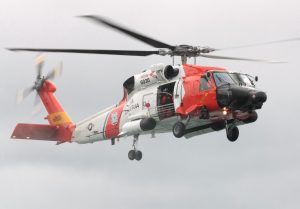
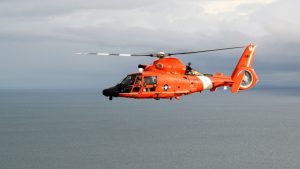
Responding promptly to the distress call was a U.S. Coast Guard Air Station Astoria MH-60 Jayhawk helicopter crew and a U.S. Coast Guard Station Cape Disappointment 29-foot Response Boat-Small II crew.

By 3 p.m., the helicopter crew reached the scene and located a person stranded on top of a dayboard channel marker. A rescue swimmer was deployed and retrieved the individual, who was hoisted from the water to the helicopter.

Published on:

Wheel-300x150The U.S. Coast Guard Sector Columbia River is clamping down on “paper captains” in the waters of Washington and Oregon thanks to Lt. Cmdr. Colin Fogarty, enforcement chief for the sector in Warrenton, Oregon. As an educated and licensed attorney, Fogarty, and his colleagues are highly skilled at proving Jones Act violations and enforcing the law.

Under the Jones Act section 12131 of title 46 of the United States Code, U.S. flagged vessels are required to be under the command of a U.S. citizen. In an effort to save money, some vessel owners hire foreign nationals to command U.S. flagged commercial fishing vessels, offering lower pay. A U.S. citizen, often a subordinate or a deckhand, is listed on paper as the captain. These “paper captains” are not qualified or properly trained to command a vessel. Not only are they breaking the law, but they are putting crewmembers at risk. Lack of proper training and human error cause a majority of maritime accidents.

“The employment of a foreign national as captain aboard a U.S.-flagged commercial fishing vessel is illegal,” said Lt. Cmdr. Colin Fogarty, the enforcement chief at Coast Guard Sector Columbia River in Warrenton, Oregon. “The practice of utilizing paper captains subverts U.S. laws and regulations designed to protect hard-working American fishermen and mariners.”

Published on:

918-300x209
The US Coast Guard rescued three commercial fishermen on Sunday morning after their fishing vessel COASTAL REIGN began taking on water. The crew reported that their vessel struck a submerged object as they navigated the mouth of the Columbia River.

Watchstanders at Coast Guard Sector Columbia received the captain’s mayday call (listen here) at 3:20 a.m. An MH-60 Jayhawk helicopter was launched, and first to arrive on the scene at 3:38 a.m. A 47-foot motor life boat from Ilwaco, Washington arrived shortly thereafter, and assisted with the dewatering of the fishing vessel.

The dewatered vessel was then towed to safety and moored at 4:40 a.m.

Published on:

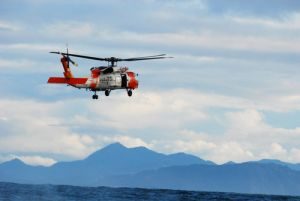
ASTORIA, Ore. - A Coast Guard MH-60 Jayhawk helicopter crew from Air Station Astoria, search for a man overboard dummy during a training exercise with the Columbia River Bar Pilots west of the Columbia River entrance, Nov. 8, 2010. The Coast Guard and Columbia River Bar Pilots began conducting the semi-annual joint drill in 2009 and continue to practice man overboard retrieval techniques to ensure that procedures for locating a person in the water will run smoothly as the two forces work together.U.S. Coast Guard photo by Petty Officer 3rd Class Nate Littlejohn
On November 26th, 2016  the Coast Guard rescued an injured crew member more than 170 miles offshore from the Columbia River. The 23-year-old man was aboard the 617-foot Global Saikai, which had left Longview, WA for Kashima, Japan carrying a load of timber.

Coast Guard Sector Columbia River received the call after the crew member fell from a ladder and broke his arm. An MH-60 Jayhawk helicopter crew was launched from Warrenton, OR to transfer the man to emergency medical personnel, who in turn took him to Columbia Memorial Hospital in Astoria, OR.

Weather at the scene was reported as raining with light wind, 13 foot seas and 9 mile visibility.

Published on:

Earnest Tug Boat
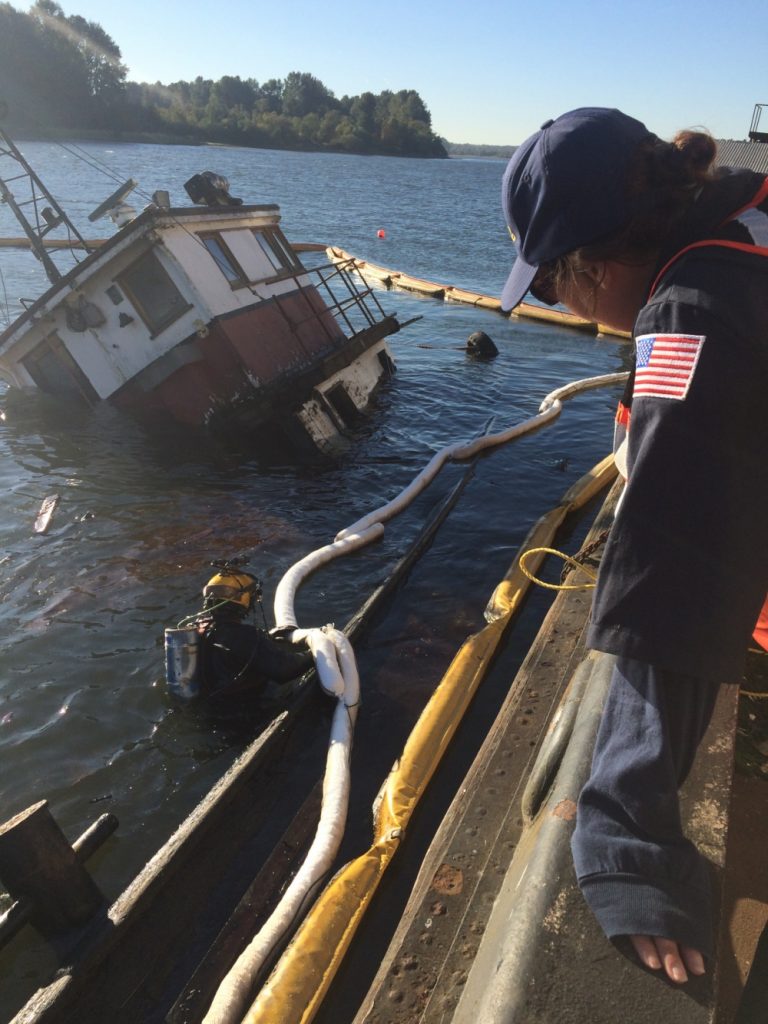
The Oregon State Department of Environmental Quality and the US Coast Guard responded to an 82-foot sunken tug at 8:49pm on the evening of Sunday, September 25th. The Earnest, a wooden-hulled vessel, sank on the Columbia River in Goble, OR. The incident was reported via the National Response Center.

Divers from Ballard Diving were contracted by the Incident Management Division in Portland to assess and address any fuel or other sources of pollution which may have been present after the sinking.

Clay Jonak, the owner of the Earnest, reported the vessel was carrying approximately 100 gallons of residual diesel fuel when it sank in Columbia County. Several other older tugs and barges are owned by Jonak, which he is attempting to salvage and scrap.

Contact Information